1. Introduction — Entering the Rideshare World
When I first downloaded the Uber app and started driving in my city, I thought I was just earning a bit of extra cash. Little did I know that stepping into the rideshare world meant navigating an insurance maze I was completely unprepared for. I quickly realized that my personal auto policy didn’t fully cover commercial driving, and the thought of being financially liable in an accident was terrifying.
That’s when I started exploring rideshare insurance, and what began as curiosity quickly turned into a series of headaches, lessons, and, eventually, strategies I wish I had known from day one.
2. The Confusing State Requirements
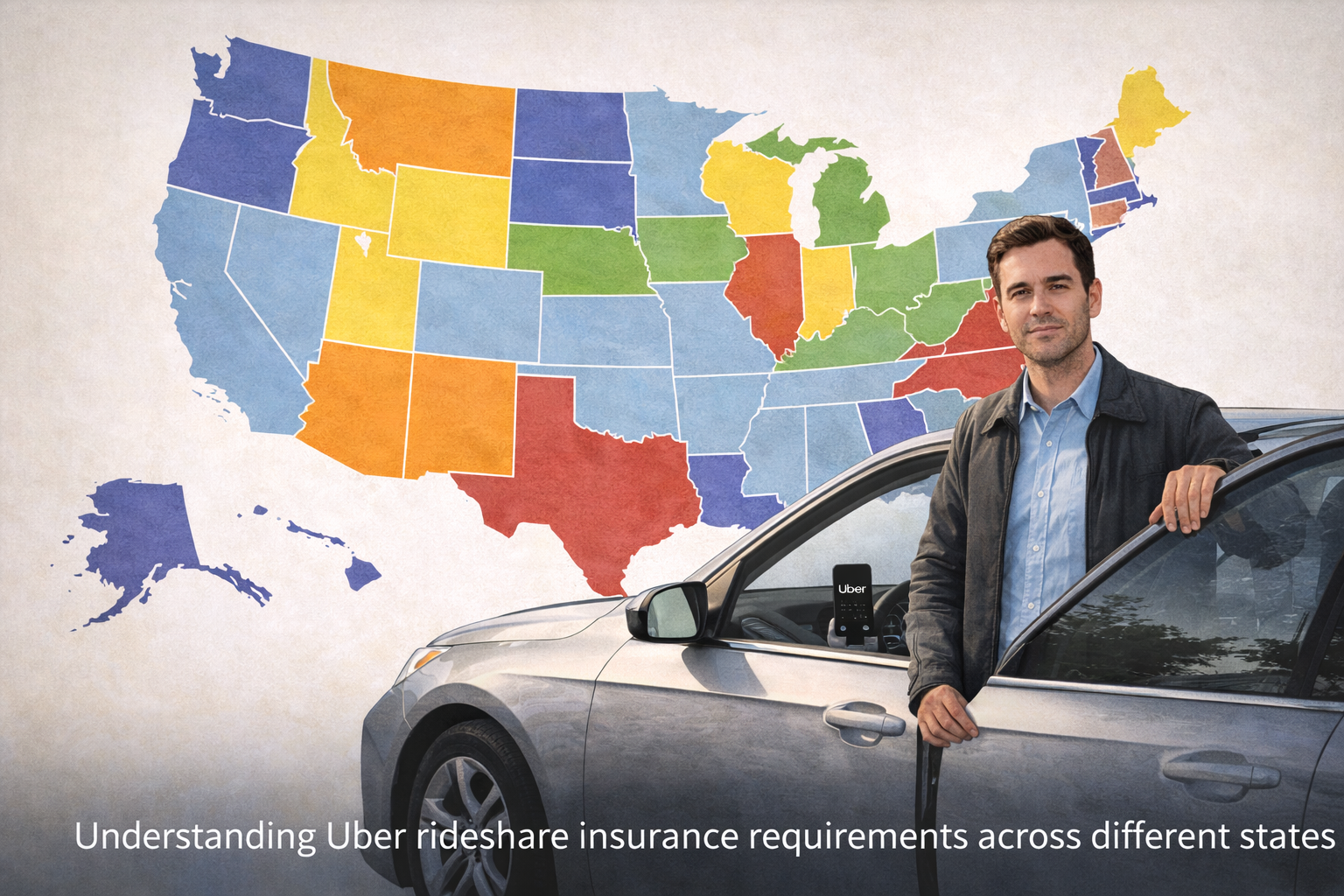
One of the first obstacles I ran into was the difference in state insurance requirements. I live in California, but I often drive near Nevada for weekend trips. Each state had different rules: liability coverage thresholds, mandatory collision coverage, and what counts as “commercial use” varied.
At first, I thought I could rely solely on Uber or Lyft’s platform insurance. I was wrong.
-
In Period 1 (waiting for a ride request), your personal policy often does not apply, but many drivers are unaware of this.
-
In Period 2 (en route to pick up a passenger), coverage may partially rely on the platform, but deductibles can be high.
-
In Period 3 (ride in progress), the platform usually offers the most protection, but some limits are surprisingly low.
I felt like I was constantly tiptoeing through a minefield of regulations — one misstep could cost me thousands.
3. My Emotional Rollercoaster Buying the First Policy
Buying my first rideshare insurance was an emotional ordeal. I remember sitting at my kitchen table, staring at three different quotes on my laptop, each more confusing than the last.
-
Policy A promised “comprehensive coverage” but had hidden exclusions for periods when the app was off.
-
Policy B was cheaper but required me to file paperwork through an archaic portal.
-
Policy C relied on Uber’s base coverage with no additional protection.
I felt anxious, overwhelmed, and even a bit betrayed by insurance agents who seemed more interested in commissions than clarity.
Here’s what I learned: cheaper isn’t always better, and what’s advertised as “full coverage” often has loopholes that only appear when you need it most.
4. Real-Life Pain Points
Claim Denials
Nothing shook my confidence like my first accident while driving for Uber. A minor fender-bender while waiting for a ride request turned into weeks of frustration. My insurer initially denied the claim because the car was being used for rideshare “commercial purposes,” even though the app was technically off.
Premium Increases
After a minor incident, I noticed my personal auto rates jumped significantly. I felt punished for being a rideshare driver — a reality many drivers face nationwide.
Complex Processes
The reimbursement process is often slow and confusing. I spent hours on phone calls, submitting documents multiple times, and still didn’t know if I was fully covered.
5. Comparing Insurance Plans
After weeks of trial and error, I analyzed different coverage options. Here’s a simplified comparison table I created to guide my decision:
| Plan Type | Coverage Scope | Deductible | Monthly Premium | Pros | Cons |
|---|---|---|---|---|---|
| Personal Auto + Rideshare Add-On | Period 1–3 | $500 | $80 | Lower cost, platform coverage supported | Period 1 coverage sometimes limited, complex paperwork |
| Full Rideshare Specialty Policy | Period 1–3 | $250–$500 | $120 | Designed for drivers, clear terms | Higher monthly cost |
| Platform-Only Insurance | Period 2–3 | $0 | $0 | No extra cost | No coverage during app-off, low limits |
Creating this table helped me see the differences clearly. It wasn’t just about price — it was about peace of mind.
6. How I Adjusted My Strategy
After several frustrating experiences, I developed a new approach:
-
Read the fine print — never rely on agent summaries alone.
-
Document everything — keep ride logs and screenshots of app status.
-
Join driver communities — forums and social media groups helped me learn pitfalls.
-
Combine policies wisely — pairing a rideshare specialty policy with my personal auto coverage offered both affordability and safety.
After implementing this, my stress levels dropped dramatically, and I felt confident on the road. I finally understood what “coverage gap” meant and how to avoid it.
7. Lessons from the Broader Driver Community
By connecting with drivers across the US, I discovered common struggles:
-
Misunderstandings about coverage during waiting periods
-
Frustration with claim denials due to app status confusion
-
Rising premiums after minor incidents
-
Lack of transparency from some insurers
Tips I picked up from experienced drivers:
-
Always take photos after an accident
-
Record ride requests and statuses to support claims
-
Ask insurers about coverage for “app off” and “between rides” periods
These insights mirrored my own struggles and helped me fine-tune my approach.
8. Final Takeaways
Driving for Uber and Lyft taught me that insurance isn’t just a formality — it’s a crucial safety net. Here’s what I want fellow drivers to know:
-
Never assume coverage — always verify in writing.
-
Compare options — not just price, but terms, deductibles, and coverage periods.
-
Document incidents — evidence is your best protection.
By taking these steps, I transformed my rideshare experience from stressful and uncertain to controlled and secure. Today, I drive with confidence, knowing I am truly protected — not just on paper, but in real life.