
Introduction
Many Lyft drivers assume their personal auto insurance policy is sufficient as long as they drive carefully or only work part-time. This assumption is one of the most common—and costly—mistakes rideshare drivers make. The reality is that personal auto insurance and Lyft driver insurance coverage are designed for very different risk profiles.
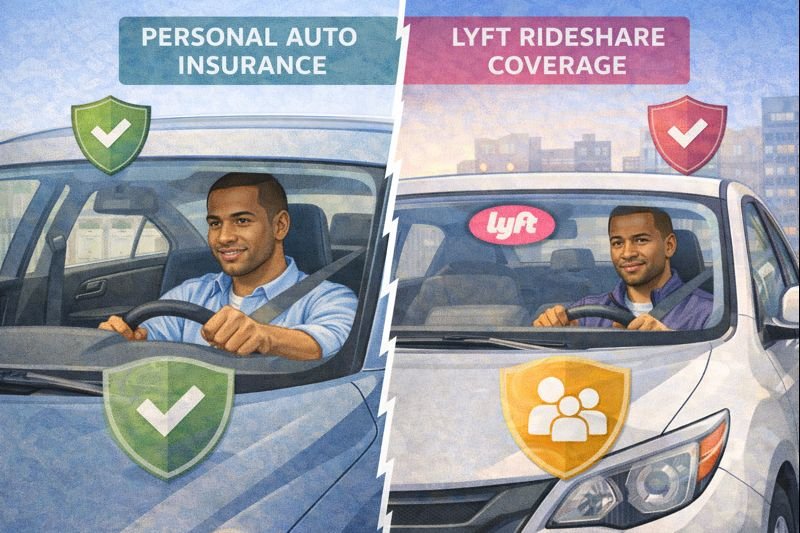
This in-depth comparison of Lyft driver insurance coverage vs personal auto insurance explains how the two differ, where coverage gaps exist, and why Rideshare Insurance is essential for drivers who want continuous protection and legal compliance while driving for Lyft in the United States.
Understanding Personal Auto Insurance
Personal auto insurance is designed for private, non-commercial vehicle use. It assumes that the vehicle is used for commuting, errands, and personal travel—not for transporting paying passengers.
What Personal Auto Insurance Typically Covers
-
Liability coverage for bodily injury and property damage
-
Collision coverage for vehicle damage after an accident
-
Comprehensive coverage for theft, vandalism, and natural disasters
-
Medical payments or personal injury protection, depending on state law
What It Does Not Cover
Most personal auto insurance policies include a commercial use exclusion, meaning:
-
Driving for Lyft is not covered
-
Accidents during rideshare activity may result in denied claims
-
Failure to disclose rideshare driving can lead to policy cancellation
What Is Lyft Driver Insurance Coverage?
Lyft provides insurance coverage for its drivers, but this coverage is conditional and limited. It applies only during specific phases of driving and does not replace personal auto insurance or rideshare insurance.
Lyft’s Coverage Periods Explained
Lyft divides driver activity into distinct periods:
-
App Off: No Lyft coverage
-
App On, Waiting for Request: Limited liability coverage
-
En Route or Passenger in Vehicle: Higher liability and some physical damage coverage
Lyft’s policy is primarily designed to protect third parties and comply with legal requirements—not to fully protect drivers.
Lyft Driver Insurance Coverage vs Personal Auto Insurance: Key Differences
1. Coverage Eligibility
-
Personal Auto Insurance: Active only during private use
-
Lyft Coverage: Active only during rideshare activity
Neither policy alone provides continuous protection.
2. Liability Protection
-
Personal Auto Insurance: Covers liability during personal driving
-
Lyft Coverage: Covers liability only during app-on periods
Without Rideshare Insurance, drivers may be uninsured during the waiting period.
3. Collision and Comprehensive Coverage
-
Personal Auto Insurance: Does not apply during Lyft driving
-
Lyft Coverage: May apply during active trips but often with high deductibles
Rideshare insurance can extend collision and comprehensive coverage to app-on waiting periods.
4. Deductibles
-
Personal Auto Insurance: Deductibles vary by policy
-
Lyft Coverage: Deductibles are often significantly higher
This can result in substantial out-of-pocket expenses after an accident.
5. Claim Approval Risk
-
Personal Auto Insurance: Claims may be denied if rideshare activity is discovered
-
Lyft Coverage: Claims may be delayed or limited by policy terms
Rideshare insurance reduces disputes by clearly defining coverage.
Where Rideshare Insurance Fits In
Rideshare Insurance acts as a bridge between personal auto insurance and Lyft’s company-provided coverage.
How Rideshare Insurance Enhances Protection
-
Covers app-on waiting periods
-
Extends personal policy benefits into rideshare use
-
Reduces deductible exposure
-
Provides continuous coverage
For a detailed breakdown of coverage phases, see Article 2: Uber and Lyft Rideshare Insurance Coverage Explained.
Real-World Example: Coverage Gap in Action
Consider a Lyft driver who is logged into the app and waiting for a ride request when another vehicle rear-ends them.
-
Personal auto insurance denies the claim due to commercial use
-
Lyft provides limited liability but no collision coverage
-
The driver must pay for vehicle repairs out of pocket
With rideshare insurance, collision coverage would typically apply, protecting the driver financially.
Is Rideshare Insurance Mandatory for Lyft Drivers?
In many states, rideshare insurance is either required by law or necessary to meet minimum coverage standards. Even where not explicitly required, it is strongly recommended.
For legal context, refer to Article 3: Do Uber Drivers Need Rideshare Insurance in the US?—the same principles apply to Lyft drivers.
Cost Comparison: Is Rideshare Insurance Worth It?
Rideshare insurance typically adds a modest premium to a personal auto policy. When compared to:
-
Vehicle repair costs
-
Medical bills
-
Legal liability
…the value becomes clear. The cost of rideshare insurance is often far less than a single uncovered accident.
Common Myths About Lyft Insurance
“Lyft Covers Everything”
False. Lyft’s coverage is limited, conditional, and varies by state.
“I Only Drive Occasionally”
Coverage gaps apply regardless of driving frequency.
“Personal Insurance Will Step In”
Most policies explicitly exclude rideshare activity.
Best Coverage Strategy for Lyft Drivers
The safest and most comprehensive approach is:
-
Maintain a personal auto insurance policy
-
Add a rideshare insurance endorsement or policy
-
Rely on Lyft’s coverage as supplemental protection
This layered strategy ensures continuous coverage.
Frequently Asked Questions
Can Lyft drivers drive without rideshare insurance?
Some do—but they assume significant financial risk.
Does rideshare insurance replace Lyft coverage?
No. It complements and strengthens it.
Does rideshare insurance apply to both Uber and Lyft?
Most rideshare policies cover driving for multiple platforms.
Conclusion
When comparing Lyft driver insurance coverage vs personal auto insurance, one fact becomes clear: neither option alone provides adequate protection. Personal auto insurance excludes rideshare activity, while Lyft’s coverage is limited and conditional.
Rideshare Insurance fills the critical gap, ensuring that drivers are protected during all phases of rideshare driving. For Lyft drivers who want financial security, legal compliance, and peace of mind, rideshare insurance is not optional—it is essential.
🔗 Internal Linking Strategy Used
-
Article 2: Coverage structure & driving periods
-
Article 3: Legal necessity & compliance