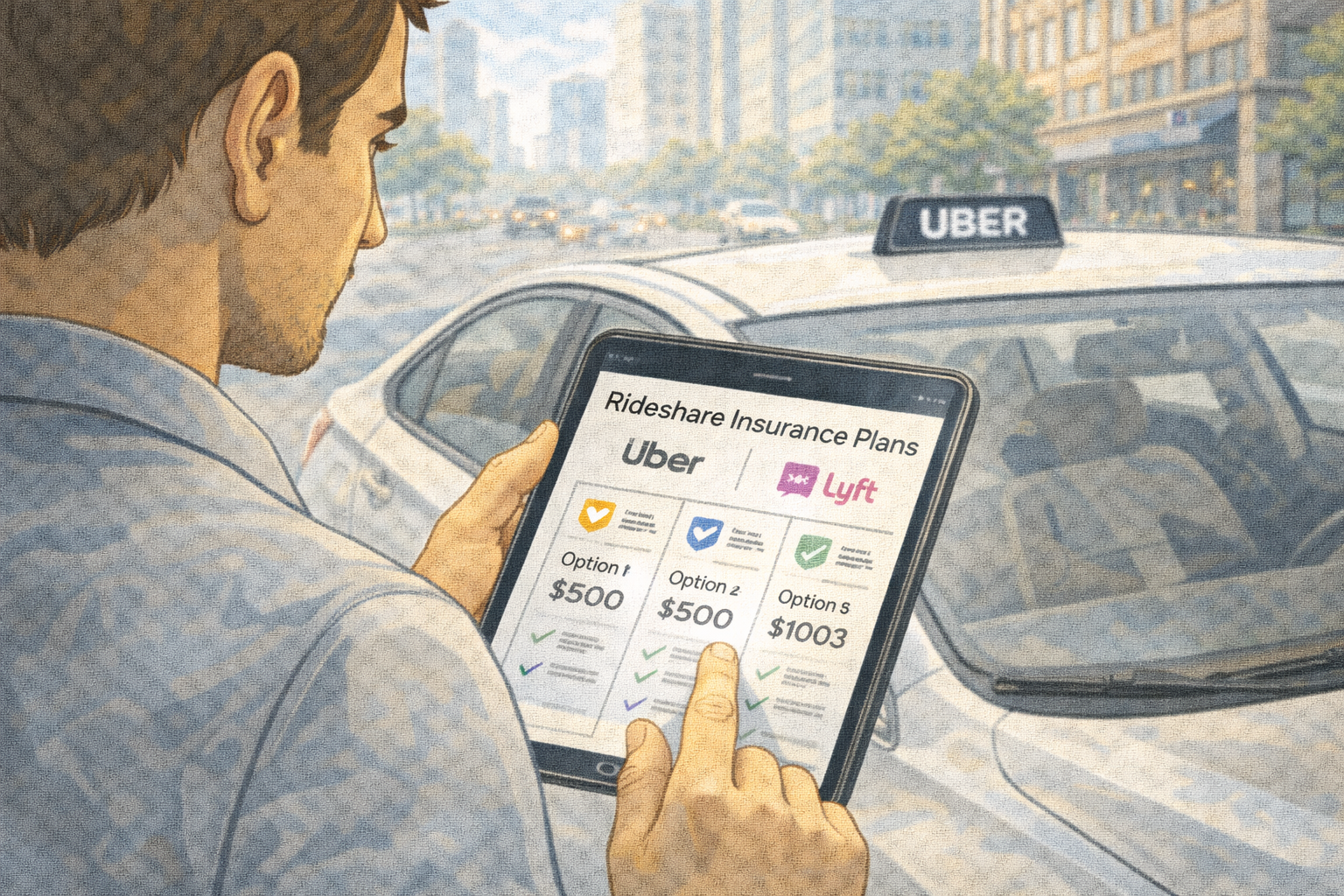

1. Introduction — The Surprise of Premiums
I’ll never forget the day I received my first rideshare insurance quote. I sat at my desk, coffee in hand, and stared at a number that made my stomach drop. $120 per month? For a part-time driver? My heart sank. I had expected a small supplement to my personal auto insurance, not a full-blown premium that rivaled my car payment.
That’s when I realized: rideshare insurance costs can be confusing, unpredictable, and sometimes downright frustrating. Over the years, I learned the hard way how to save money while still being fully covered.
2. Understanding the Cost Factors
After diving deep, I discovered several factors that determine rideshare insurance premiums:
-
Driving history – Accidents, tickets, and violations can double or triple your rates.
-
Vehicle type and age – Newer cars or vehicles with high safety ratings often qualify for lower premiums.
-
Coverage period selection – Policies covering all periods (App Off, Waiting, Passenger Onboard) cost more than minimal coverage.
-
State regulations – States like California, New York, and New Jersey often have higher required liability minimums, increasing costs.
-
Deductibles – Higher deductibles reduce monthly premiums but increase out-of-pocket expenses in case of a claim.
I learned that these factors interact in ways I didn’t expect. For example, switching to a policy with a slightly higher deductible saved me almost $30 per month without compromising critical coverage.
3. My First Cost Shock
When I first signed up, I tried using platform insurance alone. It seemed like a free option, but after a minor accident while waiting for a ride request, I discovered that the platform covered very little for damages when the app was off. My wallet took the hit.
I felt angry, frustrated, and betrayed — I thought I was covered, but fine print killed my confidence. That experience taught me one lesson: never assume cost-free coverage equals sufficient protection.
4. Comparing Plans — My Table of Costs
After months of research, I created a comparison table based on my own experiences and quotes from various providers:
| Plan Type | Coverage Periods | Deductible | Monthly Premium | My Experience / Notes |
|---|---|---|---|---|
| Personal Auto + Rideshare Add-On | Period 1–3 | $500 | $80 | Affordable, partially fills gaps; paperwork required |
| Specialty Rideshare Policy | Period 1–3 | $250 | $120 | Full protection, clearly defined terms; higher cost |
| Platform-Only Insurance | Period 2–3 | $0 | $0 | No cost, minimal coverage; gaps for App Off period |
| Hybrid Strategy (Add-On + Specialty) | Period 1–3 | $250–$500 | $100–$110 | Balanced cost and coverage; my preferred method |
This table helped me visualize trade-offs between cost, coverage, and peace of mind. Seeing numbers side by side clarified why spending a little more upfront could prevent massive headaches later.
5. Tips I Learned to Save Money
After some trial and error, I discovered practical ways to reduce premiums without losing coverage:
-
Increase your deductible strategically – For minor accidents, paying a higher deductible is often cheaper than monthly savings on small premiums.
-
Bundle policies – Some insurers offer discounts when you combine rideshare coverage with your personal auto insurance.
-
Maintain a clean driving record – Even a single ticket can spike premiums; I started tracking my trips and avoided risky behaviors.
-
Shop annually – Insurers constantly adjust pricing; I often found better deals each year.
-
Choose vehicles wisely – My second car, a safety-rated sedan, reduced my monthly premium by $20–30.
I also found that talking to driver communities online was invaluable. Tips from experienced Uber and Lyft drivers helped me identify lesser-known discounts and policies.
6. Pain Points I Encountered
Even with careful planning, I faced several cost-related headaches:
-
Premium spikes after minor claims: My personal auto insurer increased my premium after a minor fender-bender while driving rideshare. I felt punished for a mistake that was partially covered.
-
Misleading marketing: Some policies advertised “affordable coverage” but only applied to Period 2–3, leaving me exposed while waiting for rides.
-
Limited options for older cars: Initially, my 12-year-old sedan didn’t qualify for the best rates; I had to switch vehicles to save money.
I remember sitting in my car, scrolling through quotes, and feeling helpless and anxious. Every dollar mattered, and every policy fine print terrified me.
7. How I Fixed the Problems — My Strategy
Over time, I developed a systematic approach:
-
Document and review app usage: Keeping screenshots of when the app was on, waiting, or offline helped prove coverage periods.
-
Compare multiple providers: I now shop at least 3–5 providers before committing to a policy.
-
Negotiate deductibles and discounts: Some insurers adjusted my premium when I combined policies or agreed to higher deductibles.
-
Track claims history: Avoiding minor claims helped prevent premium spikes.
-
Join rideshare driver forums: Forums revealed hidden costs, gaps, and tips to optimize coverage.
After implementing these strategies, I reduced my effective premium from $120 to around $100 per month without losing coverage. That $20 monthly difference may not seem huge, but over a year, it adds up to $240 saved, plus peace of mind.
8. Visualizing My Cost Savings
To illustrate, here’s a simple visualization of my strategy:
| Month | Premium Before Strategy | Premium After Strategy | Notes |
|---|---|---|---|
| Jan | $120 | $110 | Switched to hybrid policy |
| Feb | $120 | $105 | Applied bundling discount |
| Mar | $120 | $100 | Increased deductible, clean driving record |
| Apr | $120 | $100 | No claims, premium stabilized |
| May | $120 | $100 | Annual review, better quotes |
Seeing this trend helped me feel in control. I went from anxious and confused to confident and strategic.
9. Broader US Driver Insights
From conversations with drivers nationwide, common cost-related issues include:
-
Premium spikes after minor claims
-
Lack of coverage during app-off periods
-
Older vehicles being penalized
-
Confusion about deductible vs. coverage trade-offs
Advice from experienced drivers:
-
Track every ride and app status for evidence
-
Compare multiple providers annually
-
Ask specifically about “Period 1” coverage
-
Consider hybrid strategies combining add-ons with specialty policies
These lessons mirrored my own experiences, confirming that my approach was aligned with best practices.
10. Final Takeaways — Cost vs. Confidence
The journey taught me that insurance costs are about more than money — they’re about peace of mind and financial security.
Here’s my advice to fellow rideshare drivers:
-
Understand all periods of coverage — don’t assume platform insurance alone is sufficient.
-
Document and monitor your rides — evidence is key for claims.
-
Compare providers and strategies — small differences in premiums or deductibles can make a big difference.
-
Invest in knowledge — driver forums, communities, and reading fine print are your best friends.
After months of trial, error, and learning, I finally found a balance: affordable premiums, full coverage, and confidence behind the wheel. Driving for Uber and Lyft is stressful enough — your insurance shouldn’t add to it.