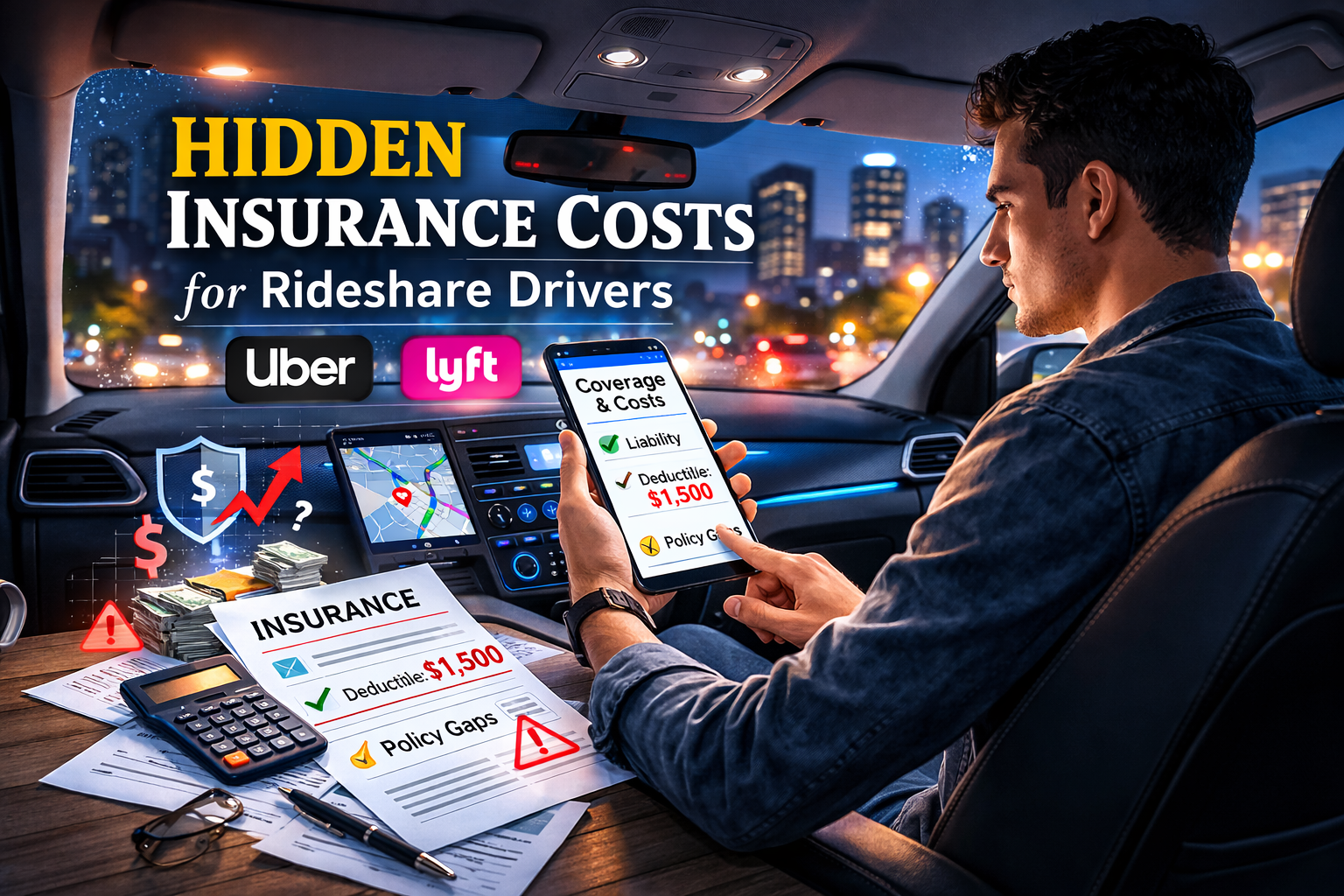

Rideshare driving looks simple on the surface.
Turn on the app. Accept rides. Get paid.
But beneath the surface lies one of the most misunderstood financial risks in the gig economy: insurance exposure.
Most new drivers focus on fuel costs, maintenance, and earnings per mile. Very few take the time to truly understand what happens if something goes wrong. And when accidents happen, the gap between expectation and reality can cost thousands of dollars.
This article breaks down the hidden insurance costs of rideshare driving — and what smart drivers do differently.
The Three Insurance Periods That Change Everything
One of the biggest misconceptions in rideshare driving is assuming that platform insurance works like personal car insurance.
It doesn’t.
Insurance coverage depends entirely on what “period” you’re in:
| Period | App Status | Primary Coverage | Risk Level |
|---|---|---|---|
| Period 0 | App OFF | Personal Auto Policy | Standard |
| Period 1 | App ON, No Ride Accepted | Limited Liability Only | High |
| Period 2 | Ride Accepted, En Route | Platform Coverage Active | Moderate |
| Period 3 | Passenger in Vehicle | Full Platform Coverage | Lower |
The real danger zone?
Period 1.
This is when most coverage gaps occur.
During this time, personal insurers may deny claims because you’re engaged in commercial activity. Meanwhile, platform liability coverage is limited and may not include collision unless you carry specific coverage on your personal policy.
Many drivers don’t discover this until it’s too late.
Why Your Personal Auto Policy May Not Protect You
Insurance companies assess risk differently for commercial activity. When you use your car for rideshare, your exposure increases.
More miles.
More passengers.
More unpredictable driving environments.
Without a rideshare endorsement or hybrid policy, your insurer could:
-
Deny your claim
-
Cancel your policy
-
Refuse renewal
Even worse, some drivers only learn this after filing a claim.
The financial damage can include:
-
Repair costs out of pocket
-
Higher future premiums
-
Lapse in coverage
-
Difficulty finding a new insurer
Insurance underwriting has become more data-driven in 2026. Telematics, claim history databases, and cross-policy reporting mean insurers often know more than drivers assume.
The Deductible Shock Most Drivers Aren’t Prepared For
Even when platform insurance applies, the deductible can be painful.
Many major rideshare platforms have deductibles around $2,500 for collision coverage.
That means even a minor accident could cost you thousands before coverage pays a dollar.
For a driver operating part-time to supplement income, this can erase months of earnings.
Ask yourself:
Can you comfortably absorb a $2,500 unexpected expense tomorrow?
If not, your risk strategy may need adjustment.
Long-Term Financial Impact of a Single Claim
One accident doesn’t just cost you once.
It affects:
-
Your renewal premium
-
Your insurability
-
Your rideshare eligibility
-
Your vehicle resale value
Premium increases after at-fault accidents can range from 20% to 50%, depending on state regulations and insurer risk modeling.
Over three years, that could mean:
-
$1,200 to $3,000 in additional premiums
-
Reduced insurer options
-
Stricter underwriting scrutiny
For high-mileage drivers, frequency risk compounds this even further.
Smart Risk Strategies Experienced Drivers Use
Veteran drivers treat insurance like a business decision.
Here are common strategies they adopt:
1. Adding a Rideshare Endorsement
This is often the most cost-effective upgrade. It fills the gap during Period 1 and reduces denial risk.
2. Choosing Higher Deductibles Strategically
Some drivers raise personal deductibles slightly to offset the cost of rideshare add-ons while maintaining emergency savings for major claims.
3. Annual Policy Shopping
Rates change frequently. Shopping annually prevents silent premium creep.
4. Maintaining Clean Driving Habits
Telematics-based discounts are increasingly common. Safe driving scores can reduce rates over time.
State Variations Matter More Than Drivers Think
Insurance regulations vary significantly by state.
Some states require specific minimum liability limits for Transportation Network Company (TNC) drivers. Others rely primarily on platform-provided coverage.
Premium differences between states can exceed 40%.
Urban density, litigation environment, uninsured motorist rates, and weather risk all influence pricing.
If you recently moved states but kept the same insurer, you may be overpaying — or underinsured.
The Emotional Cost: Stress and Uncertainty
Beyond numbers, there’s a psychological burden.
Driving for rideshare already involves:
-
Traffic pressure
-
Passenger ratings
-
Income variability
Adding insurance uncertainty amplifies stress.
Drivers who fully understand their coverage report greater confidence and less anxiety after incidents. Knowledge reduces panic.
And panic decisions are expensive decisions.
Is Rideshare Driving Still Worth It After Insurance Costs?
That depends on how you structure it.
Here’s a simplified financial comparison:
| Category | Unprepared Driver | Strategically Insured Driver |
|---|---|---|
| Monthly Insurance Cost | Lower initially | Slightly higher |
| Claim Risk Exposure | High | Managed |
| Deductible Shock | Severe | Planned |
| Long-Term Premium Stability | Volatile | Controlled |
The difference isn’t just cost — it’s predictability.
Gig work rewards flexibility, but financial sustainability requires planning.
Final Thoughts: Insurance Is Not an Afterthought
Rideshare driving is a business activity.
And every business carries risk.
The drivers who succeed long-term treat insurance not as an expense to minimize, but as a financial shield to optimize.
Before your next shift, ask yourself:
-
Do I fully understand my coverage in every period?
-
Can I afford my deductible?
-
Would a claim threaten my financial stability?
If the answer is unclear, it may be time for a policy review.
Because in rideshare driving, what you don’t know about insurance can cost far more than what you pay for it.