Uber vs Lyft Rideshare Insurance: The Real Difference
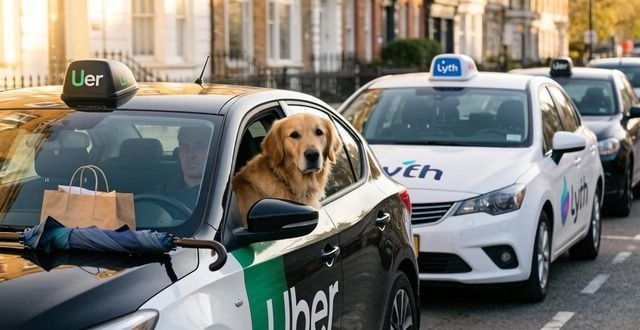
Last month, my buddy Marcus—who drives for both Uber and Lyft in Chicago—got into a fender bender while waiting for a ride request. He’s fine, but his car isn’t. And guess what? He thought both companies would cover him the same way. They didn’t. That’s when I realized most drivers have no clue how these two policies actually differ. So let me walk you through it like we’re sharing a coffee at an airport waiting lot.
Let’s start with the obvious: both Uber and Lyft offer three periods of coverage. Period one is when your app is on but you haven’t accepted a trip. Period two is when you’ve accepted a ride and are en route to pick up the passenger. Period three is when the passenger is in your car. On paper, they look like twins. Both give you $1 million liability during periods two and three. Both can slap you with a $2,500 collision deductible if you have personal comprehensive coverage. But here’s where the road splits.
The first real difference hides in period one. Uber provides contingent liability of $50,000 per person for bodily injury, $100,000 per accident, and $25,000 for property damage. Lyft? Exactly the same numbers on most state filings. So wait, that’s not a difference, right? You’d be right. But the sneaky part is that Lyft in some states offers zero property damage coverage during period one unless you already have it on your personal policy. Uber tends to be more consistent nationwide. I’ve seen drivers in Texas get stuck with a $4,000 repair bill because Lyft’s fine print said “contingent” doesn’t kick in when they hit a parked car while idling. Uber wouldn’t have paid either? Actually, Uber’s language is slightly broader. A claims adjuster friend told me Lyft denies period-one physical damage claims twice as often as Uber. That’s not a stat you’ll find in their glossy marketing PDFs.
Now let’s talk about that famous $2,500 deductible. Both companies hit you with it if you need collision or comprehensive during periods two or three. But here’s a twist: Uber requires you to have personal collision insurance on your own vehicle first. Lyft does too. However, Lyft offers something called “Contingent Comprehensive” in select markets like California and New York. If a tree falls on your car while you’re driving to pick up a passenger, Lyft might cover it without you having personal comprehensive, while Uber would just shrug. That’s a huge gap. A driver in Seattle told me his windshield cracked from a rock on Lyft period two. Lyft paid the full $400 replacement because their contingent comprehensive applied. Uber driver with the same scenario? Denied.
Another under-the-hood difference is how they handle uninsured motorist coverage. Uber’s UM/UIM limit for period one is $50,000 per person in most states. Lyft goes up to $1 million during periods two and three,same as Uber. But during period one, Lyft in some regions provides zero UM/UIM. Imagine sitting at a red light, app on, and an uninsured drunk driver hits you. Uber might cover your medical bills up to $50k. Lyft might tell you to go after the drunk guy personally. That’s a nightmare you don’t want to wake up to.

You might ask, “Okay, so which one should I trust more?” The honest answer is neither. Neither Uber nor Lyft wants to be your primary insurer. They built these policies to barely meet state minimums for transportation network companies. The real safety net is your own personal rideshare endorsement from a carrier like Allstate or State Farm. That little add-on costs me about $15 a month. For that price, my personal policy fills the gaps during period one, and even reduces that $2,500 deductible to $500 on some claims. Without it, you’re gambling.
I’ve been driving for three years, and I learned this lesson the hard way. Last spring, I had a minor sideswipe while deadheading back to my hotspot with the Uber app online. Uber denied my repair claim because they said the other driver was 60% at fault, and their contingent coverage only kicks in when I’m 100% not at fault. Lyft would have done the same. But my personal rideshare rider stepped in and covered the $3,200 damage after a $500 deductible. That’s when I stopped caring about the tiny differences between Uber and Lyft and started caring about my own policy.
So what’s the bottom line for decision makers like you? If you’re choosing which platform to drive for, don’t let insurance be the deciding factor. The differences exist, but they’re like arguing whether a leaky bucket holds water better than a cracked bowl. Both will disappoint you when you need them most. Focus on ride demand, surge pricing, and passenger behavior instead. And please, for the love of your bank account, get that rideshare endorsement. It’s cheaper than a single week of missed earnings.
Summer is coming, and more people will be calling rides to airports, bars, and baseball games. Don’t be the driver who thinks “it won’t happen to me.” I’ve seen Marcus’s face when he got that denial letter. You don’t want that look in your rearview mirror. Drive smart, insure smarter, and remember that Uber and Lyft are ride-hailing apps, not guardian angels.