USAA Rideshare Truth: Driver‘s Risk
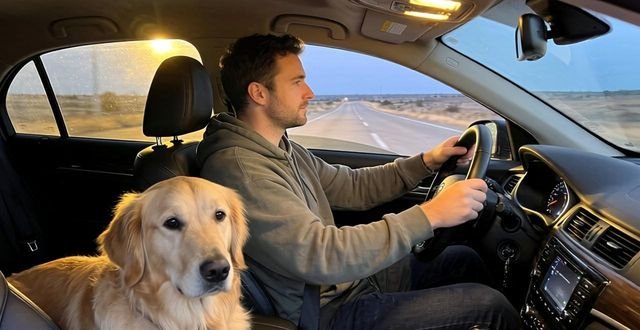
Whosoever steps into the gig economy’s embrace, particularly behind the wheel of a personal auto turned public conveyance, must first peer into the abyss of standard insurance policies. Verily, a chasm exists between the personal pleasure cruise and the first ping of a ride request, a gap wherein many a driver hath found themselves financially unmanned. USAA, that stalwart servant to the military community, offers a bridge across this void, yet its contours are not scrawled in simple terms for the casual observer.
Imagine the scene, if thou wilt. It is 3:47 on a drizzly Tuesday morning in San Antonio. You have just delivered a freshly caffeinated soul to the airport’s curb, the app is off, and you are drifting back toward the familiar glow of an all-night diner. The personal policy on your Toyota Camry slumbers soundly, believing you are simply another commuter. But the moment you tap that green “Go Online” button, waiting for a ride request in a quiet suburb, a subtle shift occurs. Most standard personal auto policies, including USAA’s foundational offerings, specifically exclude any business use. They are designed for grocery runs and visits to the inlaws, not for idling whilst a hungry algorithm seeks a fare. Herein lies the treacherous “Period One” the driver awaits a request. In this limbo, if a sleepy pedestrian wanders into your stationary bumper, the claim may be denied. The logic is cold, yet absolute: thou wert engaged in the pursuit of commerce.
Then cometh the chime of a match. That cheerful ping heralds the arrival of “Period Two” en route to pick up the passenger. The risk does not merely increase; it metastasizes. Now you are a targeted vehicle, moving with purpose to collect a fare. Most rideshare endorsements, including the one from USAA designed for this very purpose, activate their contingent comprehensive and collision coverage here. Yet, verily, the liability portion of the personal policy often remains dormant or severely curtailed. A driver struck by a momentary lapse, perhaps glancing at the passenger’s profile picture, could drift into a lane. The resulting physics lesson, involving a municipal bus and a guardrail, would unleash damages that dwarf the value of the Camry. The rideshare endorsement steps in, but usually with a high deductible, and it acts as excess coverage. That polysemous term “excess” is the devil’s detail: it means USAA will pay only after the rideshare company’s own contingent liability policy has exhausted its limits. Imagine explaining that delicate financial ballet to a hospital billing department.
Many a veteran driver, accustomed to the crisp clarity of a barracks order, stumbles upon the concept of livery exclusion. This ancient term, recalling horse-drawn cabs for hire, lies hidden in the boilerplate of nearly every standard policy. It is the industrialstrength lock on the door to commercial coverage. USAA’s rideshare addon, often a simple rider attached to a standard policy, is a noble effort, yet it is not an openhanded gift. It functions more like a keyhole one must peer through. For the driver who relies on this income, the distinction between the three periods of a rideshare trip is not academic jargon; it is the architecture of solvency.
Consider the practical arithmetic. The rideshare company’s policy, during Period One (waiting), offers only contingent liability, often with a paltry cap. If you strike a pedestrian while waiting for a ride, the company’s coverage may be as low as $50,000. A single night in a trauma ward incinerates that sum before the second set of vitals is taken. Your personal USAA policy, without the endorsement, would deny the claim due to the business use exclusion. With the endorsement, USAA would step in, but again, as excess. You would first need to file against the rideshare company’s meager offer, a process designed in a labyrinth. Only then, after that small fortune evaporates, would USAA’s coverage cascade down. The deductible, often $1,000 or $2,500, is a savage cut to a week’s earnings.
Yet, do not mistake this caution for condemnation. For the honorable member of the military family, USAA’s solution remains arguably the least treacherous path. Their customer service, steeped in the dialect of deployments and PCS moves, actually understands the concept of a “nonowned auto” when you borrow a friend’s truck for a shift. Their underwriting does not treat a driver like a pariah. The application process is refreshingly direct: one declares the intent to drive, pays a modest uptick in premium, and the rider attaches. The coverage during Period Three (passenger aboard) is comprehensive, matching the limits of your personal policy.

But what of the silent hours? The late night returns, the deadhead miles to a surge zone, the final ride of the night that ends fifty miles from home? The endorsement follows the car, but the psychological weight does not lift. A driver I know, a retired Sergeant First Class, learned this calculus the hard way. He carried the USAA rideshare endorsement. One night, a passenger opened the door into the path of a cyclist. The cyclist was not injured, but the carbon fiber frame of the bicycle was shattered. The passenger vanished into the night. The cyclist, correctly, sought damages from the driver. The rideshare company’s active policy during the passenger phase covered it, but the deductible and the weeks of administrative limbo nearly broke the sergeant’s spirit. He kept driving, because what else provides the flexibility for a son’s therapy appointments? But he now looks at every passenger’s exit with the wary eye of a sentinel.
The deeper truth, the one that no glossy pamphlet articulates, is that USAA’s product is a compass, not a shield. It points the right direction, but the storms still hit the deck. The endorsement does not cover physical damage to your own car if you are at fault during Period One or Two unless you have purchased comprehensive and collision on your personal policy. That is a separate line item,a monthly bleed. Furthermore, if you drive for multiple platforms Uber, Lyft, and perhaps a medical courier service the single endorsement may be insufficient. The policy language often limits coverage to “transportation network company” activity as defined by state law. Stray into a delivery app that transports a burrito but not a person, and the coverage crumbles.
Verily, the landscape is shifting. Some states now mandate higher minimums for TNC drivers, forcing USAA and others to adjust. But progress is a slow caravan. For now, the prudent driver interviews their own policy as if it were a hostile witness. They call USAA not once, but twice, recording the date and the representative’s ID. They ask the specific question: “If I am online, waiting for a request, and I hit a telephone pole, what is my outofpocket cost for my car?” The answer often reveals the fine print: the comprehensive and collision from the endorsement only applies if you have already purchased it on your personal policy. It is a nested doll of conditions.
Therefore, the path forward for the gigeconomy soldier is one of ritualized vigilance. The USAA rideshare endorsement is, for many, the best available bad option. It is superior to the terrifying nakedness of a pure personal policy and superior to the indifferent bureaucracy of a commercial fleet policy for the solo driver. Yet, it is not a panacea. One must set aside a separate savings account, a deductible fund, of at least $2,500. One must drive with the knowledge that the first $1,000 of any atfault incident is not a misfortune but a certainty drawn from one’s own account.
Look to the horizon. The future of mobility may bring embedded, permile commercial policies that switch seamlessly with the app’s status. Until that celestial dawn, the USAA member drives under a covenant of personal responsibility. The company provides the legal tool, but the hand that wields it, the eyes that scan the dark crosswalk at 2 AM, the foot that hovers over the brake near the bar district these belong to the individual. The insurance is a quiet partner, not a savior. It ensures that a single mistake does not cascade into lifelong destitution. It promises, in its dense paragraphs and exclusion lists, that the financial wound will be a deep gash, not a decapitation.
So, charge your phone. Clean your windshield. And know the three periods of your labor as well as you know your own name. The road demands it, and your peace of mind, purchased in monthly premiums to USAA, earns its keep only when you understand precisely where its shield ends and your own skin begins.