Does Your Virginia Rideshare Insurance Really Cover You?
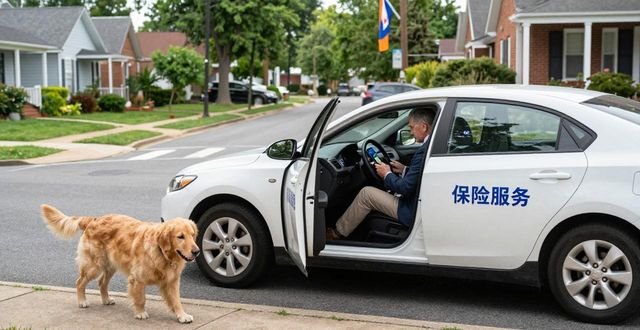
“The road has its own language, and only the patient learn to listen.” I remember that line from a professor back in my Richmond days. He was talking about writing, but now, sitting here in this late spring drizzle watching headlights blur across the wet asphalt, I think he was really talking about driving. Or maybe about insurance. Because honey, let me tell you, the fine print speaks in whispers, and if you are not paying attention, it will absolutely leave you stranded.
So you have signed up to drive for Uber or Lyft in Virginia. You are excited. The app is open, the gas tank is full, and you are cruising down Broad Street, feeling that familiar buzz of potential fares. You think to yourself, “I have car insurance. I am good.” Oh, my sweet summer child. That is where the story gets messy. Your personal auto policy, the one you pay for every single month, is looking at you right now with what I can only describe as a tired, disappointed sigh. It sees that app glowing on your dashboard, and it starts backing away slowly. Most personal policies have a little clause, a tiny little gremlin hiding on page fourteen, that says they will not cover you the second you are available for hire. They call it the livery exclusion. I call it the “gotcha” moment.
Think about the timeline. Period one. You have turned on the app, you are waiting for that ping, but you do not have a passenger yet. You are just sitting there, maybe grabbing a coffee at that 7-Eleven on Cary Street. In Virginia, your personal policy might still have your back here, depending on the company. But it is a maybe. A squishy, uncomfortable maybe. Then the ping happens. You accept the ride. Period two. You are driving to pick them up. BAM. Your personal policy is gone. Poof. Like a ghost in the machine. And here is the kicker: the rideshare company’s policy has not fully kicked in either. They often provide contingent liability during this period, which is a fancy way of saying they will cover damage to the other guy’s shiny Tesla, but your own car? Your own medical bills if you sneeze and run into a telephone pole? That is a big, fat zero.
And then period three. The passenger is in the backseat. They are scrolling on their phone, the smell of their fancy perfume filling your car. Now you are fully under the company’s commercial policy. You think you are safe. And you are, kind of. But have you read those deductibles? They are not the cute five hundred dollars you are used to. We are talking twenty-five hundred dollars, maybe more. I remember talking to a driver in Norfolk last fall. He hit a deer out near the tunnel. The deer was fine, by the way, dramatic but fine. But his bumper was toast. His rideshare deductible was two thousand dollars. He did not have that kind of cash just lying around. He told me, “I thought I was covered.” The deer thought it was covered too, I guess. Nobody was.

So where does Virginia law step into this little dance? The Commonwealth does not require rideshare companies to provide primary coverage for period two. That means the gap is real. The gap is hungry. And the gap is waiting for you to make one tiny mistake. This is where a Virginia rideshare endorsement on your personal policy becomes the quiet hero of this story. Progressive has it. Geico has it. State Farm has it. It is usually a small add-on, maybe twenty or thirty extra dollars every six months. That is like giving up two fancy lattes. For that tiny price, the endorsement covers that treacherous period two. It makes the gap disappear. It turns the scary wolf into a little puppy.
But here is the thing that keeps me up at night. I talk to drivers all the time in Arlington, in Virginia Beach, out in the Shenandoah Valley. And so many of them say, “Oh,I have full coverage.” Full coverage. Those two words are the biggest lie in the insurance world. Full coverage is a marketing dream. It is like saying you have a “full closet.” That does not mean you have a coat for Antarctica. It means you have stuff. You need to actually look at your declarations page. You need to call your agent and ask the specific question. Do not say, “Am I covered for rideshare?” Say, “Does my policy have a written rideshare endorsement that covers me from the moment I accept a ride until the moment the passenger is in my car?” If they hesitate, if they say “I think so,” you hang up and you find a new agent.
The seasons are changing out there. The summer tourists will be flooding into Alexandria and Williamsburg soon. More cars on the road mean more chances for fender benders. The rain in Virginia has a personality all its own, sneaky and sudden. I have seen the aftermath of a simple mistake. A driver rear-ends someone at a stoplight because they were looking at their phone to confirm a pickup. Suddenly, they are facing a thirty thousand dollar hospital bill for the person they hit, plus their own smashed radiator. And their rideshare insurance says “sorry, honey, that was period two.” Their personal policy says “sorry, honey, you were working.” And the driver is left holding a bag full of nothing but bad news and collection letters.
Do not let that be you. The road is long and it does not care about your good intentions. It only cares about the paper trail. So tonight, before you go out to chase those weekend surge prices in Georgetown or that late night crowd in Richmond, do yourself a real favor. Pull out your phone. Call your insurance company. Wait on hold through that terrible elevator music. And ask the question. Get the endorsement. Write the name of the person you talked to on a sticky note. That little piece of paper might be worth more than every fare you earn in the next six months. Because at the end of the day, you are not just driving people around. You are driving your future. And your future deserves better than a whispered “maybe” from a contract you never read. The asphalt is listening. Make sure your coverage is too.