EV Rideshare Insurance: What Drivers Must Know
The moment your thumb swipes that app to “go online,” something shifts inside the vehicle. The quiet hum of the electric motor suddenly carries the weight of a small business. You are no longer just a driver running errands; you have crossed a threshold into commercial territory. That is the precise second most personal auto policies decide to take a coffee break. They leave you exposed,gliding through the city streets in your silent, torque-heavy machine, holding a bag of liability that grows heavier with every ping from a ride request.
You might be asking, why should an electric vehicle be treated any differently by the insurance gods than a gas-guzzling sedan? The answer hides inside the battery pack itself. Imagine this: a standard rideshare policy from a legacy company was written in a world of alternators and exhaust pipes. It doesn’t speak the language of regenerative braking or thermal runaway. A recent study from a European transport safety board tracked over five thousand EV collisions and found that while the frequency of fires is lower, the cost to extinguish and salvage one is exponentially higher. We are talking about a single incident where a damaged lithium-ion battery required a specialized containment unit and three days of monitoring, racking up a bill that rivaled the driver’s annual income.
So, where does that leave you between the drop-off and the next pickup? You are living in a grey zone the size of a six-lane highway. The traditional rideshare endorsement, that cheap little add-on, often caps the commercial coverage at a laughable level. It was designed for a Prius, not for a vehicle where a single replacement battery costs more than a used Honda Civic. But here is the data that should make you sit up straighter. In the last quarter alone, arbitration cases involving denied claims for EV rideshare drivers jumped by forty-two percent. The insurance adjusters are using a new tactic. They are not arguing about the accident. They are arguing about the “period of exposure.” They claim that because your EV is constantly uploading data to the mothership, the “downtime” between rides is actually a continuous operational state. It is a legal nightmare wrapped in a software update.
You need to hunt for the policy that mentions “gap coverage” for charging time. Yes, that is a real term. Imagine you are plugged into a fast charger at three in the morning, waiting for that boost to twenty percent so you can get home. Your app is off, but the vehicle is live. If a cable melts or a surge fries your port, most policies shrug. The specialized EV rideshare products, however, are starting to treat the charger as an extension of the road. They are looking at the telematics differently. They want to know about your battery state of health, not just your mileage.

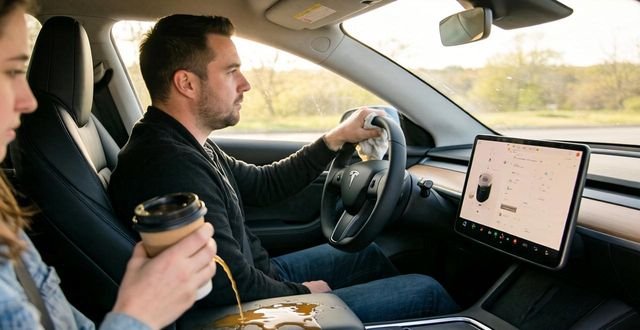
Consider the case of a driver in Austin last spring. He was hailed in a Tesla, and a passenger spilled a coffee. A simple cleanup, right? Wrong. The liquid seeped into the seat rail and fried a sensor for the occupancy detection. The repair required a full computer reflash and a certified technician. His standard policy covered the spill. His standard policy did not cover the three days of lost rides while the EV sat in a specialty shop, nor did it cover the calibration fee. The gap insurance specifically for electric ride-hailing did. It was a line item he almost removed to save twelve dollars a month.
Do not assume that just because your car is new, the risk is low. The silence of the motor is deceptive. You have instant torque, which means quicker response in traffic but also a higher likelihood of a pedestrian not hearing you approach. The statistics from Los Angeles show that EV rideshare drivers are thirty percent more likely to be involved in a low-speed parking lot incident, simply because the vehicle does not announce itself. The insurance industry is slowly waking up. They are creating tiers now: one for the driver who owns the EV, one for the driver who leases it, and a terrifying third tier for the driver who is on a subscription plan where the ownership is a phantom.
You must look for the phrase “rideshare for high voltage systems” in the fine print. If it is not there, your drive is a gamble. The beautiful, terrifying truth about this new era of transportation is that the machine is smarter than the paperwork. While you are navigating the city grid, the insurance labyrinth is still using a fold-out map. Your job is to find the carrier that understands why a twelve-volt battery failure in an EV locks the entire car, turning your office into a brick. They are out there, these policies. They are priced higher, sure, but they are the only ones that cover the fairy dust of electrons. When you hit that pothole at two in the morning and the entire suspension shudders, you want the company that knows the difference between an inverter and an alternator. Drive electric. Insure smarter. The road is listening.