Got a Parking Ticket? Here’s What Happens to Your Rideshare Insurance
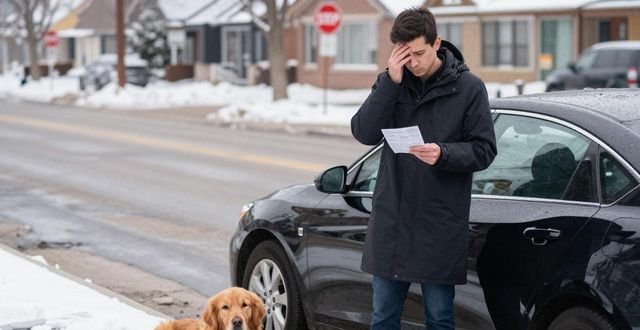
The snow is melting off the windshield in ugly gray streaks, and you’re sitting in a coffee shop parking lot, staring at that little yellow envelope tucked under your wiper blade. Congratulations. You just joined the club. Every rideshare driver in Chicago, Atlanta, or Los Angeles knows that sinking feeling. But what most of them don’t realize is that fifty dollar ticket for parking in a bus zone might just cost them a whole lot more later.
Let’s walk through a regular Tuesday. You pick up a fare at a downtown hotel, drop them off at a narrow one way street with no loading zone in sight. The app is pinging for a new ride three blocks away. You think, just this once, I’ll hit the hazards. You run into a bodega for ninety seconds. You come back out, and there it is. A parking ticket. You shrug it off. It’s just a parking ticket, right? Wrong.
Here is where the story splits into two very different paths. Path number one. You pay the fine online the same day. You forget about it. Path number two. You ignore it. Or you fight it and lose. Or you simply let it sit on your passenger seat for three months until it doubles. That little piece of paper, see, it doesn’t live in a vacuum. It goes into a database. And these days, your rideshare insurance company is getting very, very good at checking that database.
Think about the last time you renewed your policy. Did they ask about moving violations? Sure. Speeding, running a red light, failure to yield. But parking tickets? Most applications don’t mention them. They live in that gray area that drivers love to call not my problem. But the insurance underwriters, they’ve gotten clever. They’ve started looking at parking tickets as a pattern. Not as a single mistake, but as a window into your soul. Three parking tickets in six months tells them you’re rushing. You’re cutting corners. You’re the kind of driver who parks on a crosswalk because the app says you have two minutes to get to a surge zone.
And here is the part that stings. Your rideshare endorsement, the extra coverage that kicks in when you’re waiting for a trip or driving to a passenger, that beautiful little add on to your personal auto policy, it is watching you. Some of the bigger names in the game, like Progressive, Allstate, or GEICO, they have started running periodic checks on active rideshare drivers. They are not just looking at your at fault accidents anymore. They are pulling your entire driving record, including those unpaid parking violations that went to collections.
Why do they care? Because they have done the math. They have crunched the numbers on a million drivers just like you. And the data shows something uncomfortable. A driver with multiple unpaid parking tickets is statistically more likely to get into a fender bender while looking for a parking spot. They are more likely to get stressed out, check their phone, and tap a bumper at a red light. The insurance company doesn’t hate you. They just love patterns. And your parking ticket pattern is screaming something they don’t want to hear.
So what actually happens when you get that ticket? Nothing today. Probably nothing tomorrow. But sixty days from now, when your policy comes up for renewal, you might see a surprise. Not a massive spike, but a creep. Fifteen dollars more a month. Twenty three dollars. Enough to make you scratch your head and wonder why. You call customer service, and the nice person on the phone reads from a script. Your risk profile has changed. They won’t say parking ticket. They’ll say driving history. They’ll say external data. But you’ll know. That little yellow envelope is laughing at you from the recycle bin.

Here’s a real story from a driver in Denver last winter. Marcus had a perfect record for three years. Great ratings, low mileage, the whole deal. He got two parking tickets in one week during a snow emergency. Paid them both late because he was busy working seventy hours. His insurance went up by forty percent at renewal. Not because of one ticket. Because of the lateness. The city reported him to a collections agency. The collections agency sold that data to a risk scoring company. And that company sent a little note to his insurance carrier. Marcus is now paying for those two parking spots every single month, forever.
You want to avoid this mess? Here is the ugly truth. Pay the ticket the same day. Don’t think about it. Don’t frame it as a battle of principle. It’s not a battle. It’s a business expense. Take a photo of it, put the number into your payment app, and move on with your life. If you want to fight it, do it from a place of strategy, not anger. Go to court on your day off, dress like you respect the judge, and hope they throw it out. But if they don’t, pay it before you leave the courthouse.
And here is the trick nobody tells you about. Call your rideshare insurance company before they call you. Seriously. If you get a parking ticket that feels like it might be a problem, just call your agent. Ask them directly. Hey, I got a citation for parking in a commercial zone. Does this affect my rideshare endorsement? Ninety percent of the time, they will say no,not a single one. But that phone call creates a note on your file. It shows you are honest. It shows you care. And when their algorithm looks at your file six months from now, that note might just save you from that fifteen dollar creep.
Because the system is not fair. It never was. A passenger jumps out of your car, slams the door into a fire hydrant, and you get the blame. A city changes a no parking sign overnight, and you get the ticket. You are running a small business on four wheels, and every single mistake, even the ones that aren’t really mistakes, gets carved into your record. The insurance companies are not your friends. They are not your enemies either. They are just machines that eat data and spit out numbers. And a parking ticket is a delicious little snack for that machine.
So next time you are idling in a red zone because the pickup pin is wrong, ask yourself this question. Is this trip worth the next three years of higher premiums? Is that surge fare worth explaining to your insurance agent why you have three outstanding violations from the same neighborhood? You are not just driving people from point A to point B. You are building a file. Every stop, every turn, every time you leave your car in a spot that feels just a little illegal, you are writing a sentence in that file. Make sure it tells a story you want to read at renewal time.
And if you already have a few tickets sitting in your glovebox right now, unpaid and gathering dust like little time bombs? Go home. Open the glovebox. Pay them tonight. Eat the cost. Buy yourself a coffee with the peace of mind instead. Because your rideshare insurance doesn’t care about your excuses. It only cares about your record. And your record is the only thing standing between you and a decent living on these streets.