Got a Speeding Ticket? Here’s How It Screws Your Rideshare Insurance
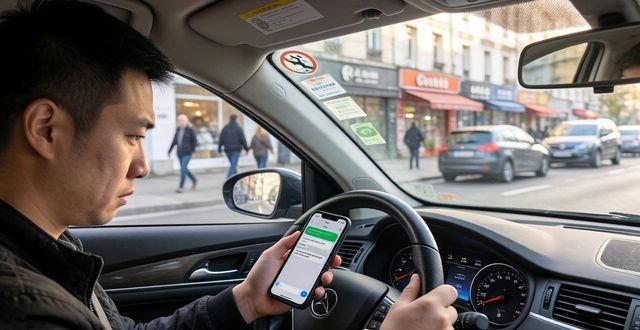
So there you are, scrolling through your Uber driver dashboard on a sleepy Tuesday morning. You’ve just dropped off a passenger who smelled like an entire perfume factory exploded in the backseat, and the only thing on your mind is that chime of a surge pricing notification. Then, an email notification pops up. Not a ride request. Worse. Your insurance provider. The subject line reads: “Important Update on Your Policy.” Your heart does that weird little stutter. You click it open, and your eyes snag on a single sentence buried in the legal jargon: “Due to a recent moving violation, your premium has been adjusted.”
That’s the moment the universe decides to remind you about the invisible contract you signed with the devil, or more accurately, with the actuarial departments of companies like Geico, Progressive, or Liberty Mutual. You thought you could just pay that $150 ticket for doing 42 in a 30-mph zone on a deserted road at 2 AM after your last ride of the night. You thought it was just a tax on going a little fast. Oh, you sweet, naive gumdrop. That little piece of paper is about to start a chain reaction that will make your wallet feel like it’s on a crash diet.
Let’s back up for a second and look at how this bizarre relationship works. When you sign up for rideshare insurance, you’re not just buying standard personal auto coverage. You’re buying a Frankenstein’s monster of a policy. It has to cover you during Period 1 (app on, waiting for a ride), Period 2 (en route to pick up a passenger), and Period 3 (passenger in the car). Each period has a different handshake agreement between your personal policy and the rideshare company’s commercial policy. Most drivers just see the dollar amount and nod. They don’t realize that the entire system is held together by a single fragile thread: your driving record. Insurance companies treat a clean record like a sacred text. The moment you get a speeding ticket, you’ve scribbled all over it with a red crayon.
Now, imagine you’re the insurance adjuster. You’re sitting in a cubicle farm in Omaha, staring at a spreadsheet that predicts human behavior. Your entire job is to quantify chaos. A driver with a clean record is a known variable. A driver with a speeding ticket? That’s a loose cannon. In their models, a speeding ticket isn’t a mistake. It’s a data point that screams “risk-seeking behavior.” They don’t see you as a tired dad who was just trying to get home. They see you as a potential liability who is statistically 40% more likely to file a claim in the next six months. And for a rideshare driver, who spends eight hours a day navigating potholes, jaywalkers, and that one guy who always slams the brakes for no reason, the risk is magnified a hundredfold.
Here’s where the real pain begins. You call your insurance company to ask about the rate hike, and you get transferred to a specialist who speaks in a soothing, monotone voice. They explain that your “risk profile has been recalibrated.” Translation: we are going to charge you so much money that you’ll consider selling a kidney. But the cruel joke is that you can’t just “shop around” the way a normal person can. You have a speeding ticket and you need rideshare endorsement. That combination is like trying to find a vegan meal at a Texas BBQ joint. Most standard insurers will flat-out reject you. “We are not accepting new high-risk commercial endorsements at this time,” they’ll say. What they mean is, “We don’t want to touch you with a ten-foot pole because our algorithms smelled the adrenaline from that time you accelerated too fast to beat a yellow light.”
So you turn to the specialty insurers. The ones with names that sound like law firms or offshore banks. They will insure you, sure. But the premium? Let’s just say that the monthly payment might be higher than your car note. And they will require you to install a telematics device. That little puck that plugs into your OBD-II port? It’s not your friend. It’s a snitch. It will log every hard brake, every rapid acceleration (you know, the kind you need to merge onto the highway during rush hour), and every minute you drive between 11 PM and 4 AM. The irony is thick enough to cut with a knife. You got a ticket for speeding, so now a machine will watch your every move,and if you drive too safely by taking too long to accelerate, you’ll get dinged for “inefficient driving.” You literally cannot win.

And don’t even get me started on the lapse coverage trap. Let’s say you look at the new premium and decide, “Screw this, I’ll just drive without the rideshare endorsement for a month.” That is a decision made in the fiery pits of bad ideas. If you get into an accident during Period 1 without that endorsement, Uber’s contingent liability might kick in, but your personal insurer will deny the claim immediately because you materially misrepresented the risk. You’ll be on the hook for the other driver’s Tesla, the passenger’s chiropractic bills for life, and the light pole you took out. One speeding ticket plus one month of bad judgment equals financial ruin. It’s a butterfly effect where the butterfly is a radar gun and the hurricane is a debt collector calling you at dinner time.
But wait, there is a whisper of hope in this dystopian nightmare. It’s called “deferral” or “non-renewal avoidance.” Some insurers have a quiet, secret policy regarding minor moving violations. If you take a defensive driving course before your policy renewal date, they might not apply the surcharge. It depends entirely on the state. In New York or California, forget about it. In Texas or Florida? You might get a break if you ask nicely and the adjuster had a good cup of coffee that morning. You have to be proactive. Don’t wait for them to find the ticket. They will find it. They run your MVR (Motor Vehicle Report) every 6 to 12 months like clockwork. It’s a ritual. So you call them. You say, “Hey, I got a 5-over ticket in a school zone during summer vacation when school was out. Can we reclassify that?” The answer is usually no, but the act of asking puts a note on your file that you’re a human being who cares, which is an anomaly in their world of spreadsheets.
Another strategy is the “clean slate” shuffle. If your policy is up for renewal in 60 days and you just got the ticket, you have a narrow window. Some insurers have a rule that they only look back 36 months from the date of the incident. Others look from the date of conviction. There is a gap of a few weeks or months where the ticket shows up on the court docket but not on your state driving record. If you can switch insurers in that limbo period, you might be able to answer “no” to the question, “Have you received any moving violations in the last three years?” legally, because technically, on paper, the conviction hasn’t been processed. This is dancing on the head of a pin, and you need a lawyer or a very aggressive insurance broker to pull it off, but it works.
Let’s talk numbers for a reality check. A single speeding ticket for 15 over can raise your personal auto insurance by 20-30%. For a rideshare policy, which is already 15-20% more expensive than personal insurance, the surcharge can be 40-60% or more. I’ve seen drivers with two tickets see their monthly premium jump from $180 to $450. That’s $270 a month. Over a year, that’s $3,240. That’s not just a ticket; that’s a used Honda Civic you just paid to the insurance gods. You might as well have lit that money on fire to keep warm during a surge pricing lull.
So what’s the final verdict? You have two choices. The first is the accept-and-adapt method. You pay the higher rate, you install the snitch device, you drive like a grandmother carrying a cake made of nitroglycerin, and you wait 36 months for that ticket to fall off your record. It’s expensive, it’s humiliating, but it keeps you legal and working. The second is the fight-back method. You hire a traffic attorney to fight the ticket, even if you think you’re guilty. A good lawyer can get it reduced to a non-moving violation like “improper equipment” or “defective speedometer.” That doesn’t affect your insurance at all. It costs $300 to $500 upfront, which stings, but compared to $3,240 in surcharges over three years? That’s a bargain. You’re essentially paying a professional to lie to the insurance company on your behalf, but in a legally sanctioned way.
The worst thing you can do is ignore it. Pretend it didn’t happen. Assume that since you already paid the fine, the universe is square. The universe is not square. The universe is a ledger, and insurance companies are the auditors. That ticket will find its way to your renewal notice. It will sit there like a ghost at the feast, reminding you that the cost of driving strangers around town isn’t just gas and depreciation. It’s also the slow, creeping realization that every time you tap the accelerator a little too hard, you’re signing a future check you might not want to cash. So slow down. Or at least, keep a traffic lawyer on speed dial. Your future self, stuck in airport traffic at midnight, will thank you.