Rideshare Insurance Claims Online: A Driver’s Guide to Getting Paid Faster
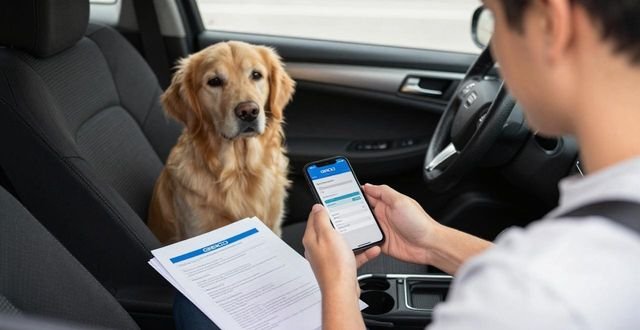
82% of rideshare drivers have admitted to not fully understanding their insurance coverage gaps,and that’s a recipe for a financial disaster waiting to happen right outside that diner where you just dropped off a customer.
You are online, it is two in the morning, and the rain has turned your windshield into an abstract painting. Suddenly, a deer decides to redecorate your front bumper. Your heart sinks not just because of the damage, but because of the dread of the paperwork. Little did you realize, the digital age has finally pulled the steering wheel away from the bureaucracy.
Let’s cut through the noise. When you hear “rideshare insurance online claims,” most veteran drivers still picture an endless labyrinth of phone menus and fax machines. That is the old paradigm, the fossil fuel of customer service. Today, the real game changer is the mobile app interface that lives right inside your Uber or Lyft driver dashboard’s partner portal.
Why does this shift matter to your wallet? Consider time as your only true inventory. Every hour you spend on hold with a claims adjuster is an hour you are not earning surge pricing. The modern digital claim process, specifically designed for the gig economy, turns that hour into three minutes. You take the photos, you upload the metadata, and the algorithm approves the towing before you have finished your first cup of gas station coffee.
I feel you, though. The skepticism is baked in. You are thinking, “Sure, it is fast, but do they actually pay?” This is where reverse logic wins the day. The legacy insurers built their moats on complexity; they hoped you would give up. The new breed of rideshare endorsements, especially those bundled with commercial hybrid policies, use online claims as a loss mitigation tool. It is cheaper for them to pay a clear-cut $2,000 claim immediately than to argue with you for six months over a $500 deductible.
Here is a case from the road. A driver in Chicago clipped a parked delivery van. Panic set in. Instead of calling a 1-800 number, he opened the “Claims” tab in his primary insurer’s app that specifically recognized “Period 1” (app online, no passenger). He submitted the dashcam footage. The system cross-referenced the GPS data. Within forty-five minutes, the virtual card for the repair shop was issued. He was back on the road before the sun came up. That is the power of streamlined adjudication.
Do not fall for the trap of thinking this makes insurance cheap. It makes it efficient. There is a distinct difference between pricing and process. To master the online claim, you must become a curator of evidence. Your smartphone is not just a communication device; it is your legal shield. Take wide shots. Take close ups. Narrate the video out loud. “This is the light pole. This is the dent. This is the reflection of the street sign.” Treat the upload form like a police report, because in the digital ether, the algorithm is the judge.

The biggest pitfall I witness is the failure to understand the handshake between your personal auto policy and the rideshare company’s contingent liability. You cannot file an online claim for a “Phase 2” accident (passenger en route) through your personal Geico portal; they will deny you in seconds and flag your account for fraud. You have to know the specific period. Period 0 (app off) is pure personal. Period 1 (waiting for a ride) requires a specific rideshare endorsement. Period 2 (passenger inside) triggers the Uber/Lyft $1 million policy first. Mix these up online, and the automated system shreds your application.
So how do you prep for the inevitable? You do not need a lawyer on retainer. You need a digital filing system. Create a folder in your cloud drive labeled “Rideshare_Claims_Template.” In it, keep a scanned copy of your driver’s license, your registration, your insurance ID card, and a blank W-9. When the bump happens, you are not scrambling for a pen in the glovebox; you are dragging and dropping files at the red light.
Let’s talk about the emotional hangover of a crash. The adrenaline is spiking. Your hands are shaking. This is the worst time to think. But the online portal does not sleep. The beauty of the asynchronous web form is that you can start the claim at the scene, save it as a draft, finish it when you get home, and upload the police report the next morning. The timestamp of the initial notification is what locks in your coverage. Do not wait for perfect information. Start the digital record immediately, even if you just write “Deer. Damage. Donut shop parking lot.” in the description box.
The industry is shifting toward virtual inspection via video call. You will see this as a feature called “Live Look” or “Snap Estimate.” Embrace this. It saves you the drive to the dingy Claims Center that smells like stale cigarettes and despair. A live agent will look at the dent via your camera, ask you to move the phone three inches to the left, and cut a check to your PayPal account before you hang up. This is the tangible reality of the gigified economy.
Do not be the driver who hides from the process. Be the driver who weaponizes convience. If you are waiting for a ride request at the airport lot, use that downtime to check the status of a previous claim. Send a secure message through the portal. Request a supplement for hidden damage. The online system leaves a paper trail. If an adjuster promises you something verbally, immediately reply to the claim email with “Per our call, you stated X.” That digital timestamp is gold in arbitration.
One final word on the language barrier. Many of the top rideshare support teams have outsourced their first-tier claim review. The bots are multilingual, but the humans are rushed. Be painfully specific. Do not write “car broke.” Write “Loss of use: Front axle fracture due to pothole on 5th Street, timestamp 2:14 AM.” The algorithm scans for keywords like “active passenger” and “contingent liability.” Feed the machine the vocabulary it craves, and it will spit out the deposit you need.
You built your schedule around the hustle. Your insurance claims process should not be a second, unpaid job. The future of roadside assistance is already sitting in your cup holder. Pick up the phone, unlock the screen, and let the data do the heavy lifting. The check is waiting in the cloud.