Full-time rideshare insurance?
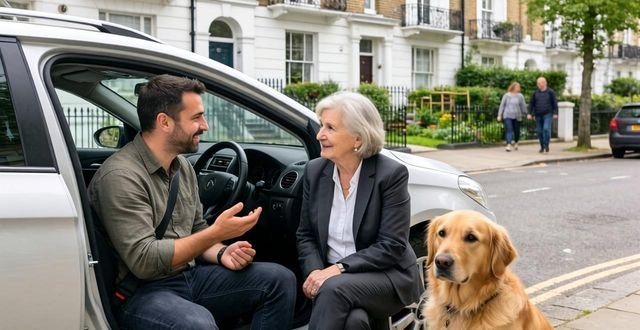
You’ve been driving for Uber and Lyft for over a year now. Five, sometimes six days a week. You know every shortcut in the city, every pothole on Maple Street, and exactly which gas station has the cheapest coffee. But here’s a question that keeps me up at night, and it should keep you up too: what happens to your personal car insurance the moment you turn on that app?
Let me paint a picture. It’s 2 PM on a Tuesday. You’re online, waiting for your first ride request of the day. The app is on, you’re parked near the mall, sipping that cheap coffee. A driver backs out of a parking spot and scrapes your entire passenger side. You think, no big deal, I have full coverage. Then you call your insurance company. And your heart sinks. Because they ask one simple question: “Were you logged into a rideshare app at the time?” You say yes. And then they say the four words every full time driver fears: “That’s not covered under your policy.”
I’ve been there. Not the accident part, but the panic of realizing my personal auto policy had a secret personality disorder. It loved me when I was grocery shopping or visiting my mom. But the minute I went online for work, it turned into a cold stranger. That’s the gap, my friend. That’s the monster hiding under the bed of every full time driver.
So what exactly is rideshare insurance? Think of it as a bridge. A grumpy, necessary bridge. Your personal policy covers you when you’re driving for personal reasons. Period. The rideshare company’s insurance kicks in when you have a passenger in the car, or sometimes when you’re en route to pick one up. But what about that awkward in‑between period? You’re online, you’re available, but you haven’t accepted a ride yet. That’s Period 1. And that’s where most full time drivers fall into a black hole. Neither your personal policy nor the company’s policy wants to take responsibility. They point fingers at each other. Meanwhile, you’re holding a repair bill the size of a mortgage payment.
Now, some of you might say, “But Uber gives me contingent liability coverage during Period 1!” Yes, they do. But read the fine print. Contingent means they step in only after your personal insurance denies the claim. And guess what? Your personal insurance will deny it. So you’re left with a deductible that’s often two or three thousand dollars, plus damage to your own car that may not be covered at all. I learned this the hard way when a fellow driver told me his story. He was online, waiting at the airport queue for forty‑five minutes. Another driver hit him. His personal insurer said no. Uber’s insurer said no because the other driver was at fault and had his own insurance. But that driver had minimum coverage that barely scratched the surface. My friend ended up paying six grand out of pocket. Six grand. That’s two months of driving, gone in a single fender bender.
You see, being a full time driver changes everything. You’re not a casual weekend warrior. Your car is your office, your lifeline, your child that you feed with gas money. When your car sits in a repair shop for three weeks, you’re not earning. And when you’re not earning, rent still comes due. So the question isn’t really “should I get rideshare insurance?” The real question is “can I afford to drive without it?”
Let me walk you through the options. Some major insurers now offer rideshare endorsements. You add this little rider to your personal policy, typically for an extra twenty to fifty dollars a month. That endorsement plugs the Period 1 gap. It covers you from the moment you go online until you accept a ride. Once you accept, the company’s insurance takes over. And after you drop off the passenger and go back online, the endorsement wakes up again. Clean and simple. Progressive has it. Geico has it. State Farm and Allstate have it in most states. You just have to ask. And don’t let them tell you “oh, you need a commercial policy.” Because a full commercial policy costs five hundred dollars a month or more. That’s for taxi drivers or delivery fleets. You’re a rideshare driver. You need the hybrid solution.
But here’s where it gets tricky. Not every state allows these endorsements. Not every insurer offers them. And sometimes, even when you buy the endorsement, the claims department interprets things differently. I’ve heard horror stories. A driver in Florida had the endorsement, got into an accident during Period 1, and the insurer still tried to deny it because his personal policy had a clause about “livery conveyance.” He fought for six months. He eventually won, but the stress aged him ten years. So what do you do? You read your policy like a detective. You call your agent and ask the dumb questions. “If I’m online but haven’t accepted a ride, am I covered?” “What about the deductible?” “Does this apply to both Uber and Lyft?” And you get the answers in writing. Email. Because when push comes to shove, a verbal promise is worthless.
Now let’s talk about the elephant in the room. The cost. You’re already paying for gas, maintenance, tires, car washes, phone chargers, and that cursed platform fee. Adding another thirty or forty dollars a month for insurance feels like salt in the wound. I get it. I really do. But think of it this way. That thirty bucks is the difference between a minor setback and a financial catastrophe. Without rideshare insurance, one accident can wipe out your savings, max out your credit cards, and put you back in a W‑2 job you hate. With it, you pay a small deductible, your car gets fixed, and you’re back online in a few days. That’s not an expense. That’s a shield.

I remember driving a passenger last year, a retired accountant named Margaret. She asked me what I did for a living. I said I drive full time. Then she asked about insurance. I told her I had the rideshare endorsement. She nodded and said, “You know, in accounting, we call that a hedge. You pay a little to avoid losing a lot.” That stuck with me. Margaret was right. You’re hedging against a random Tuesday afternoon when someone else’s carelessness meets your worst nightmare.
So how do you get started? First, call your current auto insurer. Ask specifically about “rideshare insurance for full time drivers” or “transportation network company endorsement.” If they don’t offer it, or if the price is ridiculous, shop around. There are companies that specialize in this. I switched from a big name to a smaller regional insurer that actually understood my life. My premium went down by twelve dollars a month, and my coverage went up. Second, check your rideshare app’s insurance page. Uber and Lyft both have detailed breakdowns of what they cover and when. Print that page out. Compare it with your endorsement’s wording. Make sure there are no gaps. Third, keep a digital copy of your insurance ID card in your glove compartment and on your phone. When an accident happens, you won’t be thinking clearly. Having the info ready can save hours of headache.
And here’s a pro tip that most drivers ignore. Download a mileage and logs app. Honestly, just use your notes app. Every time you go online, write down the time. Every time you go offline, write it down. If you ever have to prove that an accident happened during a specific period, those logs are gold. They’re not legally binding, but they give your story credibility. Insurance adjusters are human. They respond to evidence and organization. Show them you’re a serious professional,not a chaotic gig worker.
Now let me challenge you a little. I know some full time drivers who never bought the extra coverage. They’ve been driving for three, four years without a single scratch. They think they’re invincible. But experience has taught me that the universe has a twisted sense of humor. It waits until you’re most comfortable, then hits you from a blind angle. Driving without rideshare insurance is like playing Russian roulette with a semi‑automatic. The odds might be in your favor for a while, but when you lose, you lose everything.
What about those who say, “I’ll just lie to my insurer. I’ll tell them I wasn’t online.” Don’t. Just don’t. Insurers have investigators who can pull data from the rideshare apps. They can see when you were logged in. Lying is insurance fraud, and that’s a crime. Plus, if you get caught, you’ll be blacklisted. No other insurer will touch you for years. And your rates will skyrocket for everything, even renters insurance. So tell the truth. That’s why you buy the right coverage in the first place, so you don’t have to lie.
I want you to imagine two versions of yourself. Version A is driving next month. He has the endorsement. He pays his thirty extra dollars. One rainy evening, a deer jumps in front of his car while he’s online but without a passenger. He swerves, hits a guardrail. The airbags deploy. He calls his insurer, they send a tow truck, they cover the repair minus his five hundred dollar deductible. Three weeks later, he’s back on the road. He’s annoyed, but he’s whole. Version B skipped the coverage. Same accident, same deer. He calls his insurer, they deny the claim. He calls Uber, they say sorry, not our problem during Period 1. He has to pay eight thousand dollars out of pocket to fix his car. He doesn’t have eight thousand dollars. So he takes a loan from a friend, works double shifts for two months, and barely makes rent. Which version do you want to be?
I’m not here to scare you into buying something. I’m here to tell you the truth because no one else will. Your personal auto insurance loves you like a fair‑weather friend. It’s great when the sun is shining. But the moment you start doing this job for real, it’s gone. Rideshare insurance for full time drivers isn’t a luxury. It’s the cost of doing business. Like gas, like tires, like your weekly car wash. Except this one cost keeps you from going bankrupt.
So tonight, after you drop off your last passenger and park your car, pull out your phone. Call your insurance company. Ask the question. If they don’t have the right answer, find someone who does. Because you’ve worked too hard to build this life. You’ve learned every pothole, every shortcut, every late‑night spot that still serves food at 2 AM. Don’t let a missing piece of paper take all of that away. Drive safe. Drive smart. And cover the gap.