Your Uber XL Might Not Be Covered When You Need It Most
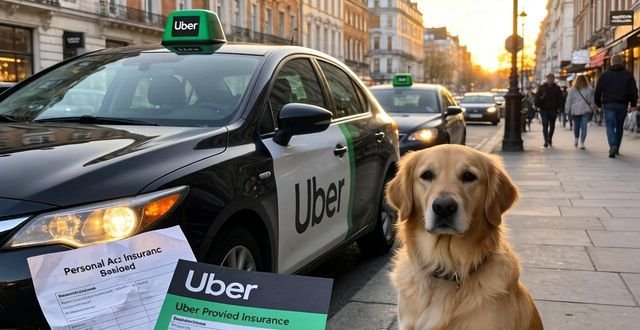
You’re behind the wheel of that beautiful, spacious beast. Three rows. Room for luggage, hockey bags, maybe a small piece of IKEA furniture if you’re feeling brave. The XL badge on your app isn’t just a feature; it’s your little gold mine on wheels. You pull up to a group of six at the airport, the ones who just realized a regular sedan is a joke. They pile in, the trunk swallows their world, and you tap “confirm drop-off” before the last door even slams shut. Feels good, right? That surge pricing during a summer storm? Pure poetry.
But here’s the quiet little secret the glossy onboarding videos never whispered. That period between you going online to chase that ride and the moment you’re actually, officially, “en route” with a passenger in the back? That’s not a gap. It’s a canyon. And for an Uber XL driver, that canyon is where your personal auto policy just stands there, shrugs, and walks away.
Let’s walk through a Tuesday. You clean the third-row seats. You vacuum up the mysterious goldfish crumbs from last week. You hit the “Go” button. You’re now in Period One. Liability only, from Uber. That’s it. The thing is, your personal insurance company? They’re not your friend here. You read that fine print once, the one your agent slid across the desk with a smile. “Commercial exclusion,” it’s called. The moment they suspect you were logged into an app, even without a passenger, your collision and comprehensive coverage just…evaporates. Poof. Like morning fog over a cold highway.
You’re driving a vehicle that weighs nearly three tons. A deer decides to audition for a Shakespearean tragedy on a dark country road. Or worse, a hailstorm turns your panoramic roof into a mosaic. You look at the damage. Then you look at your personal policy. Then you look at Uber’s Period One liability. Guess who pays for your crumpled XL? You do. Every single dent, every shattered piece of glass, every tow truck mile. That’s the house always winning. That’s the math they don’t put on the recruitment poster.
People ask, “But doesn’t Uber cover me?” They cover their neck. They cover the other guy’s hospital bill. They don’t cover your investment. Your XL isn’t just a car; it’s your floating office, your mobile storage unit, your tax deduction poster child. And for the few minutes you’re driving to a pickup zone, or circling a block because the pin is always wrong, you are naked. Figuratively, but financially, it’s the same feeling.
So you start hearing the term. Rideshare insurance. Or rather,the endorsement. It’s not a whole new policy. Think of it as a tiny, specific band-aid for that gaping wound called Period One. You call your insurance company. You brace for the hold music. And you ask for the “rideshare endorsement.” Some companies get it. Some look at you like you just asked to insure a UFO. For an Uber XL driver, this little add-on is the difference between a bad night and a ruined year.

Here’s where the road forks. You have your personal auto policy. You have Uber’s contingent coverage. And then you have this endorsement that finally, finally, connects the two during that deadly app-on, passenger-off window. Comprehensive. Collision. That whole beautiful safety net, restored. Not Uber’s liability for others. Your coverage for your massive, expensive, irreplaceable vehicle. Because let’s be real. A cracked windshield on a sedan is a headache. A cracked windshield on an XL with that proprietary acoustic glass? That’s a mortgage payment.
The irony is beautiful, isn’t it? You buy the bigger car for the bigger fares. You handle the lower gas mileage, the parking nightmares, the U-turns that feel like steering a yacht. You assume the risk is just the road. But the real risk is paperwork. The real risk is a thirty-minute window of legal nothingness. You think of that old saying about the devil being in the details. No. The devil is in the gap. The gap between “available” and “occupied.”
So what do you do? You don’t just drive. You audit. You pull out your personal policy. You look for the words “livery” or “transportation network.” You call your agent, but you don’t ask nicely. You ask specifically, “Does my policy drop to zero liability the second I turn on the app, before I accept a ride?” Listen to the pause. That pause is the truth. Some of the big names get it. Progressive, Allstate, Farmers in certain states. They sell the endorsement. Others? They’d rather you just go away.
And if your current company doesn’t offer it? You shop. Not for a new cup holder. For a piece of paper that covers the canyon. You become that annoying customer who reads the declarations page like a sacred text. Because you have to. The regulators are still playing catch-up. The laws are a quilt sewn by fifty different grandmothers, none of whom owned a smartphone. So the burden, as always, falls on the person holding the steering wheel. On you.
Remember that night you drove four sorority girls to a formal, their sequins glittering like scattered stars? You felt like a king. Or the time you took a retired couple to the winery, and they tipped you a bottle of Pinot you were too nervous to open until you got home. That’s the good stuff. That’s the soul of this gig. But none of that poetry matters if a pothole in a pickup zone wrecks your suspension and you have no one to call but your own empty wallet.
You are not paranoid. You are not a pessimist. You are simply someone who has seen the third-row seat get stained with red wine and realized there is no cosmic janitor coming to clean it up. The insurance industry speaks a dead language. But you learn to translate. You learn that “rideshare insurance for Uber XL drivers” isn’t a product. It’s a password. It’s the only word that makes the gap disappear. You pay the extra twenty bucks a month. You grumble. Then you drive past a sedan driver on the shoulder, hazards flashing, waiting for a tow he can’t afford. And you don’t say a word. You just keep your hands on the wheel, your endorsement safely filed in the cloud, and your big, beautiful, expensive machine pointed toward the next pickup. The light turns green. The app chimes. You are, for this brief shining moment, actually, truly, covered.