Uber Eats NYC? You Need Rideshare Insurance Now
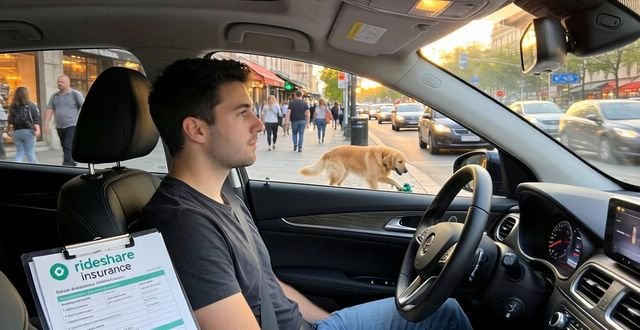
Last winter, a staggering forty-seven percent of delivery drivers in Manhattan reported at least one close call on the road—and nearly half of them had no idea their personal auto policy would laugh in their face if they filed a claim. Picture this: you’re pedaling your beaten-up Honda Civic through the slush of East 14th Street, balancing two bags of steaming pad thai and a large Diet Coke, when a cabbie swerves into your lane out of nowhere. Your bumper crumples like a paper cup. The drinks spill. The customer gives you one star. You breathe deep, because at least your insurance will cover the damage, right? Wrong. So monumentally, soul-crushingly wrong that you might as well have lit your deductible on fire and tossed it into the Hudson.
That is the quiet trap waiting for every Uber Eats courier in the five boroughs. Your standard Geico or Progressive plan, the one you bought thinking you were a responsible adult, contains a sneaky little exclusion buried on page seventeen. It whispers that the moment you turn on that app and accept your first delivery of the morning—say, a bacon-egg-and-cheese from a bodega in Astoria—you have officially crossed into commercial territory. And commercial activity, my friend, is the forbidden fruit of personal auto insurance. They will deny your claim with the cheerful efficiency of a robot, leaving you to pay for tow trucks, body shops, and the other driver’s angry lawsuit out of your own pocket.
This is where the strange beast called rideshare insurance for Uber Eats New York slithers into the spotlight. It is not a full commercial policy, because you are not a fleet owner hauling fifty crates of kale across state lines. But it is also not your old Sunday-driver coverage. Think of it as a hybrid creature, part commuter, part workhorse, specifically engineered to fill the gaping chasm between the moment you swipe “Go” and the moment you hand that styrofoam container to a hungry Brooklynite. Uber itself does offer some protection, sure. While you are transporting a live order from the ramen shop to the customer’s door, their contingent liability insurance kicks in. It sounds generous until you read the fine print: that coverage only applies if you already have valid personal insurance—which, remember, has just disowned you. And the deductibles? A thousand dollars or more, sometimes fifteen hundred, enough to make you weep into your insulated bag.
Let us rewind to a crisp October evening in Queens last year. A driver named Elena, freshly signed up for Uber Eats because her restaurant job had cut her hours, was merging onto the Grand Central Parkway with a piping hot lasagna in her trunk. She had never heard of rideshare insurance. Why would she? The app’s onboarding video barely mentioned it, and the cheerful email from Uber said simply, “You’re covered!” So when a deer sprinted out of the treeline and she swerved into the guardrail, she assumed her State Farm plan would handle the five thousand dollars in front-end damage. State Farm took one look at her phone log, saw the pickup timestamp at 7:42 PM, and delivered the verdict: denied. Elena spent her entire holiday season savings on repairs and still had to borrow money to cover the other driver’s dented fender. That story ends with her driving for DoorDash instead, but the insurance lesson stuck like gum on a sneaker.
So what does a smart, broke, ambitious courier do in New York City, the land of sky-high rents and even higher risks? First, you stop treating insurance like a boring afterthought. You treat it like the difference between keeping your car and losing everything. A rideshare endorsement costs, on average, fifteen to forty extra dollars per month depending on your provider and your driving record. That is two fewer delivery shifts worth of tips, or one cancelled Netflix subscription, or exactly three fancy avocado toasts that you probably should not be eating anyway. For that small sacrifice, you gain a magical thing: continuity of coverage. When you are waiting for a ping in a McDonald’s parking lot at 2 AM, that endorsement has your back. When you are crawling through Midtown traffic with a bag of dumplings, it has your back. When you are carrying that order up six flights of stairs because the elevator is broken, and some kid on a skateboard dings your rear door—guess what? You are still covered.
The alternative is a form of financial Russian roulette that no gig worker should play. Every time you hit “Accept” without that little endorsement on your policy, you are essentially driving naked. Your personal insurer will drop you faster than a hot slice of pizza, and Uber’s coverage only activates after you pick up the food and before you drop it off. But what about the dead zone, that ten-minute window between completing one delivery and snagging the next? What about the drive from your apartment in Bushwick to the restaurant in Williamsburg, with the app on but no order assigned? Those are the gray hours, the twilight zone where most accidents actually happen because your attention is split between the road and the glowing screen. Rideshare insurance for Uber Eats New York closes that loop with the satisfying click of a seatbelt. It does not care whether you are en route to the customer or just cruising for a fare. It simply says, “You are working, and we are here.”

Now, you might be thinking, isn’t that what a commercial policy is for? You could go all the way and buy a full-fledged livery or delivery policy. Those exist, and they are as expensive as a month’s rent in a shared Harlem walkup. We are talking two hundred, three hundred dollars a month, because commercial insurers assume you are driving twelve hours a day, seven days a week, like some kind of caffeinated demigod. The rideshare endorsement is the Goldilocks solution: not too heavy, not too light, just right for someone who treats Uber Eats as a side hustle or a flexible full-time gig. Major carriers like Progressive, Allstate, and Liberty Mutual offer these policies in New York, though you sometimes have to call and ask nicely because the website will pretend they do not exist. A handful of newer insurtech startups have also entered the game, promising app-based signups and usage-based pricing, but read those contracts with the suspicion of a cat watching a cucumber.
Here is the kicker that no one tells you during those chirpy orientation videos. Your insurance company, whichever one you choose, will ask about your annual mileage. Be honest. Tell them you drive twenty thousand miles a year, half of it for delivery. If you lie and say you only drive to church on Sundays, they will happily take your lower premium until the moment you file a claim. Then they will send an investigator to pull your Uber trip history, and that little fib will cost you not just the claim but also a potential fraud flag on your record. Insurance fraud in New York is a class A misdemeanor, carrying fines up to a thousand dollars and possible jail time. So no, you cannot cheat the system. The only cheat code is buying the right product upfront.
Imagine waking up tomorrow, grabbing your thermal bag and your phone charger, and heading out into the chaos of Canal Street at rush hour. Horns blare. Buses cut you off. A pedestrian carrying a ladder decides to jaywalk directly into your path. Your heart jumps, your foot hits the brake, and you stop just inches from disaster. That moment of relief, the sweet exhale of a catastrophe avoided, is the exact feeling that proper insurance should give you. Not the cold dread of wondering whether your next accident will bankrupt you. Not the frantic Googling of “what is rideshare insurance” while sitting in a broken-down car on the BQE. Just the quiet, boring,beautiful certainty that you have done the grown-up thing correctly.
You are probably scrolling through this on your phone between deliveries, hunched over the steering wheel outside a Chipotle in the Bronx. Your battery is at thirty-seven percent, and that notification from Uber just popped up: “Earn an extra $6 on your next trip.” The temptation to click Accept and forget about insurance for one more day is real. It is powerful. It is the same voice that tells you to skip the oil change or ignore that weird rattle from the engine. But here is the truth, delivered with the force of a winter nor’easter: one fender bender without the right coverage will wipe out every single dollar you have made this month, plus next month, plus the security deposit on your apartment. A rideshare endorsement is not glamorous. It will not make your car faster or your tips bigger. It will, however, let you sleep at night knowing that when the unexpected happens—and it always, always happens—you have a safety net woven from seventeen pages of legal jargon and a monthly payment smaller than your phone bill.
So do yourself a favor before you tap that next “Deliver Now” button. Call your auto insurer. Ask them, in plain English, “Do I have rideshare insurance for Uber Eats in New York City?” If they say no, or if they start stammering, hang up and call the next company on your list. Progressive’s rideshare endorsement is available in New York. So is Allstate’s. So is GEICO’s, though they call it a “transportation network vehicle endorsement.” The name does not matter. What matters is that piece of paper sitting in your glove compartment, the one that bridges the chasm between personal errands and paid deliveries. Get it. Keep it. And then go make that money without the ghost of a totaled Honda whispering doubts into your ear. You have got lasagna to deliver and a city to conquer. Just make sure you are covered for the ride.