Uber vs Lyft Rideshare Insurance: What Drivers Actually Need to Know
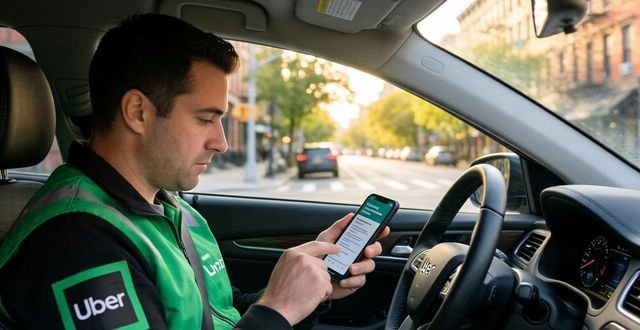
You’re logged in, it’s a quiet Tuesday night, and that third ride of the hour pops up. Then a deer darts out. Or a red-light runner slides through. Suddenly you’re staring at a crumpled bumper and a very loud question: who pays for this?
If you drive for both platforms—and many of us do—you’ve probably wondered whether Uber and Lyft treat your insurance the same way. Spoiler: they’re close, but not identical. And the differences can hit your wallet when you least expect it.
Let me rewind. Three years ago, I was splitting my week between Uber and Lyft, trying to hit those weekly bonuses. I assumed the insurance behind each app was basically a copy-paste job. Then a passenger spilled coffee all over my back seat—not a crash, but a mess that meant I couldn’t take riders for two days. I filed claims with both apps just to see what would happen. That’s when I started noticing the cracks.
The core structure is similar: both companies break your driving into periods. Period 0? You’re offline, no coverage from them. Period 1 is app on, waiting for a trip request. Period 2 is en route to pick up. Period 3 is the ride itself. In Period 1,Uber and Lyft provide contingent liability—meaning if your personal auto policy refuses to pay, their coverage kicks in. But here’s the first fork in the road. Uber’s Period 1 liability limit is typically $50,000 per person for bodily injury, $100,000 per accident, and $25,000 for property damage. Lyft’s numbers? Exactly the same. So on paper, no difference.
But the real divergence lives in Periods 2 and 3, specifically around collision and comprehensive coverage. Both offer contingent comprehensive and collision, but only if you carry those coverages on your personal policy. And the deductible is where things get interesting. Uber sets a flat $2,500 deductible for any covered incident during Periods 2 and 3. Lyft also says $2,500—but read the fine print. Lyft’s deductible applies only after your personal deductible is met. That means if your personal policy has a $1,000 deductible, Uber will still charge you $2,500 out of pocket. Lyft, on the other hand, will subtract your personal deductible first, then you only pay the difference. In that example, you’d owe Lyft $1,500. Not nothing, but a thousand dollars less than Uber.
I’ve seen drivers argue about this on forums for hours. Some say Lyft’s approach is fairer because it doesn’t double-punish you for carrying good personal coverage. Others point out that Uber’s claims adjusters tend to respond faster, especially in big cities. And that matters when your car is sitting in a tow lot accruing daily fees.
Another layer: the rideshare endorsement gap. Most personal insurers now offer a rideshare add-on (Progressive, Allstate, State Farm all have versions). That endorsement fills the Period 1 collision hole. But here’s a quiet difference—Uber actively encourages you to get that endorsement and will even ask for proof in some markets if you have a major claim. Lyft is more relaxed. They’ll process your claim regardless, then later check if your personal policy should have been primary. The practical effect? Uber claims sometimes get delayed while they verify your personal coverage status. Lyft moves ahead and sorts out reimbursement later. Which is better? Depends if you need cash now or later.

Let’s talk about a scenario nobody likes: an accident where you’re at fault. Both Uber and Lyft carry $1 million liability during Periods 2 and 3. That sounds huge, and it is. But Uber’s policy is primary from the first dollar. Lyft’s policy is also primary. No difference there. However, Uber has a history of subrogating more aggressively—meaning if there’s any chance your personal insurer should have paid part of that $1 million, Uber’s lawyers will go after them. That doesn’t affect your pocket directly, but it can make your personal premiums spike later. Lyft tends to eat those costs more quietly.
Then there’s the uninsured motorist coverage. Both platforms offer it, but only in states that require it. In California, for example, Uber provides $1 million uninsured/underinsured motorist bodily injury during Periods 2 and 3. Lyft matches that. But in Texas? Uber caps at $50,000 while Lyft goes to $100,000. These state-by-state variations are where you really need to dig. Never assume the difference you read online applies to your city.
I learned this the hard way after a minor fender bender in Austin. A driver without insurance hit me while I was en route to a Lyft pickup. Lyft’s uninsured coverage paid out without fuss. A friend who drives for Uber had the exact same situation in Houston six months later—different state rules, different outcome. He ended up eating his $2,500 deductible because Texas doesn’t require uninsured property damage coverage for rideshare.
So what do you actually do with all this? First, pull up your personal policy. See if you already have a rideshare endorsement. If not, call your agent and ask specifically about “gap coverage for Period 1.” Second, decide which platform you run more often. If you’re heavy on Uber, consider raising your personal deductible to lower your monthly premium—because you’ll be paying Uber’s $2,500 anyway after a crash. If Lyft is your main, keep your personal deductible lower to take advantage of their offset system. Third, never assume. Insurance is local. A difference between Uber and Lyft in Oregon might not exist in Florida.
One last thought—the emotional side. You’re not just driving; you’re holding a little floating office in a metal box. Every ride is a bet that nothing will go wrong. When something does go wrong, the last thing you want is to fight two insurance bureaucracies. So know your numbers before you need them. Pull up the app’s insurance page (yes, it’s buried under Legal in the settings). Screenshot the summary for your state. Put it in a folder labeled “just in case.”
The next time you’re at 2 AM with a dented door and a silent phone, you won’t be wondering. You’ll already know. And that tiny piece of certainty? That’s worth more than any bonus ride.